
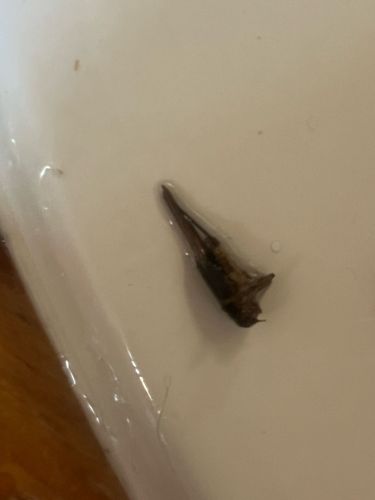
Cricket Nymph (Exoskeleton/Molted Skin)
Too difficult to determine exact genus/species from an exoskeleton fragment, but generally falls under Gryllus (Field Crickets), Acheta (House Crickets), or Ceuthophilus (Camel Crickets) among others.
- Order & Family
- Order: Orthoptera, Family: Gryllidae (True Crickets) or sometimes Gryllacrididae (Raspy Crickets/Leaf-rolling Crickets) or Rhaphidophoridae (Camel Crickets/Cave Crickets) based on the leg structure visible.
- Size
- Cricket nymphs vary in size but can range from a few millimeters up to 1-2 cm, depending on the instar (developmental stage) and species. The fragment appears to be from a nymph that would have been in this range.
Natural Habitat
Cricket nymphs are found in a diverse range of habitats depending on the species, including grasslands, forests, agricultural fields, gardens, and often indoors in basements, crawlspaces, and other damp, dark areas. They prefer environments with access to moisture and hiding spots.
Diet & Feeding
Crickets are omnivores, feeding on a wide variety of organic matter including decaying plant material, fungi, seedlings, and sometimes other small insects or carrion. Given this is likely a molted exoskeleton, the organism itself would have been feeding.
Behavior Patterns
Cricket nymphs are typically nocturnal, active at night to forage and avoid predators. They are known for their jumping ability, using their powerful hind legs to escape danger. Depending on the species, they may burrow or hide under objects during the day to stay safe and conserve moisture. As they grow, they will undergo several molts (shedding their exoskeleton) before reaching adulthood. The fragment appears to be a molted exoskeleton.
Risks & Benefits
Risks: Indoors, crickets can be a nuisance due to their chirping (adult males), and they may occasionally damage fabrics, paper, or houseplants. They do not pose a direct health risk to humans. Benefits: In natural ecosystems, crickets play a role in decomposition, breaking down organic matter. They are also an important food source for larger animals such as birds, reptiles, amphibians, and other predatory invertebrates.