
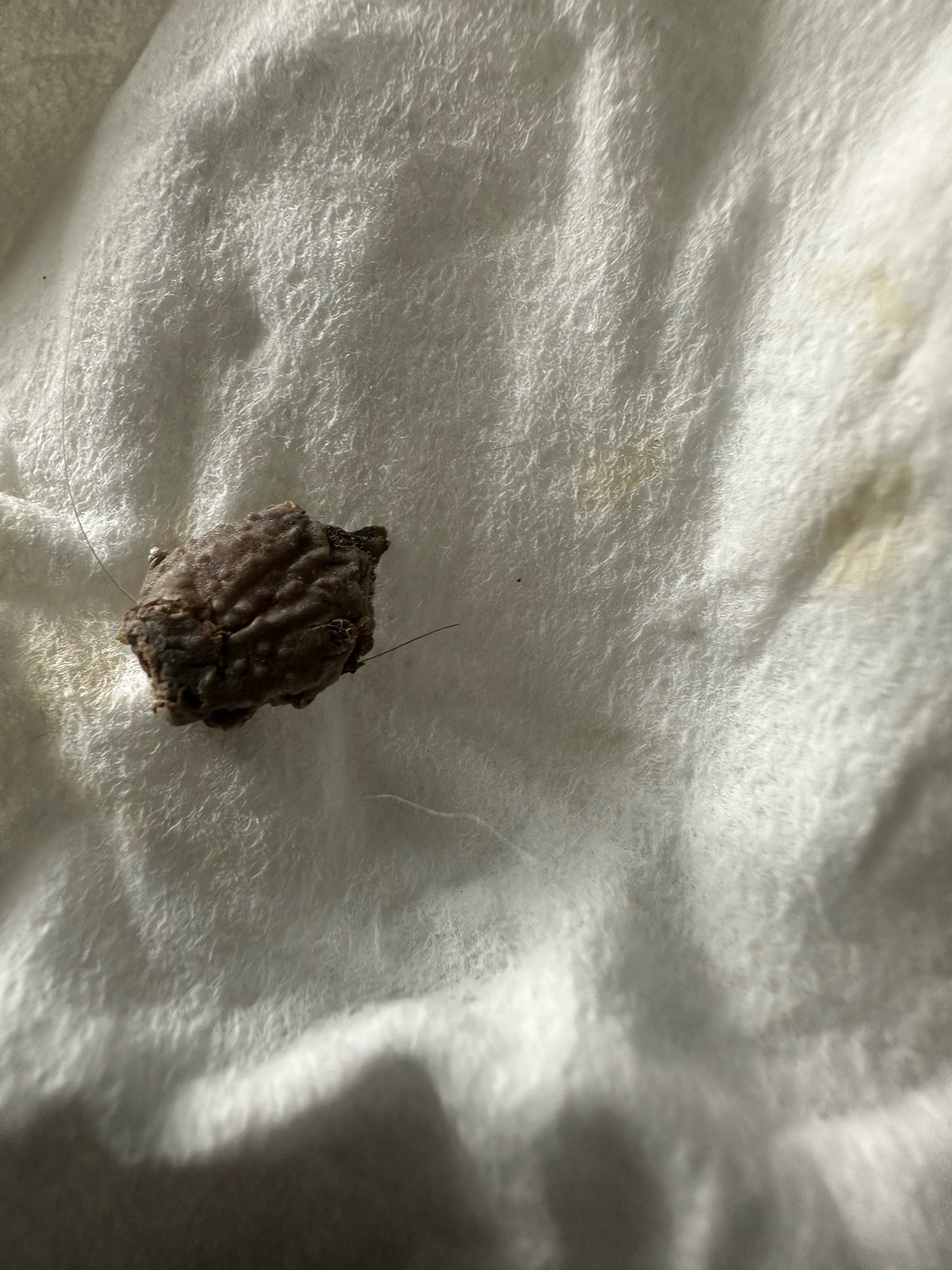
Community identification
Praying Mantis Ootheca (Egg Case)
Mantodea (Order level identification)
- Order & Family
- Order: Mantodea; Family: Mantidae
- Size
- Typically 1 to 2 inches (2.5 to 5 cm) in length.
Natural Habitat
Found attached to twigs, stems, walls, or fences in gardens, meadows, and areas with dense vegetation.
Diet & Feeding
The adult and nymph mantises that emerge are carnivorous predators, eating various insects like flies, moths, and crickets.
Behavior Patterns
The ootheca is a protective hardened foam structure produced by the female to house eggs over winter. In spring, dozens to hundreds of nymphs emerge simultaneously.
Risks & Benefits
Extremely beneficial to the ecosystem and gardeners as they provide natural pest control. They pose no risk to humans or pets.