
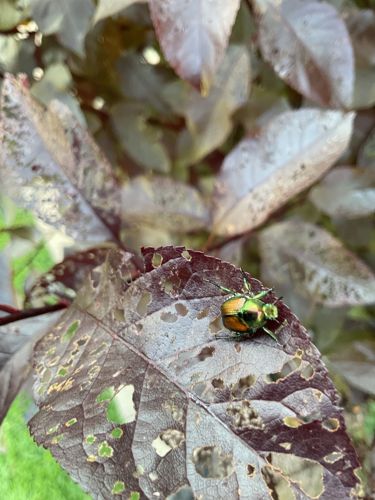
Japanese Beetle
Popillia japonica
- Order & Family
- Order: Coleoptera, Family: Scarabaeidae
- Size
- Adults typically measure 10-15 mm (0.4-0.6 inches) in length.
Natural Habitat
Japanese beetles are typically found in temperate climates. Adults are commonly found in gardens, agricultural fields, nurseries, and urban landscapes where their host plants are present. Grubs live underground in lawns and pastures.
Diet & Feeding
Adult Japanese beetles feed on the leaves, flowers, and fruits of over 300 species of plants, often skeletonizing leaves by eating the tissue between the veins. Larvae (grubs) primarily feed on the roots of turfgrasses.
Behavior Patterns
Adult Japanese beetles are active during the day, feeding on plants and laying eggs in the soil. Male Japanese beetles are attracted to females by pheromones. Females lay eggs a few inches deep in the soil, often in turf areas. Larvae (grubs) hatch from the eggs and feed on grass roots.
Risks & Benefits
Potential risks: Japanese beetles are highly destructive agricultural and horticultural pests. Both adults and larvae cause significant damage, leading to economic losses in crops, ornamental plants, and turf. There are no known direct benefits to humans or the ecosystem, other than serving as a food source for some predators.