
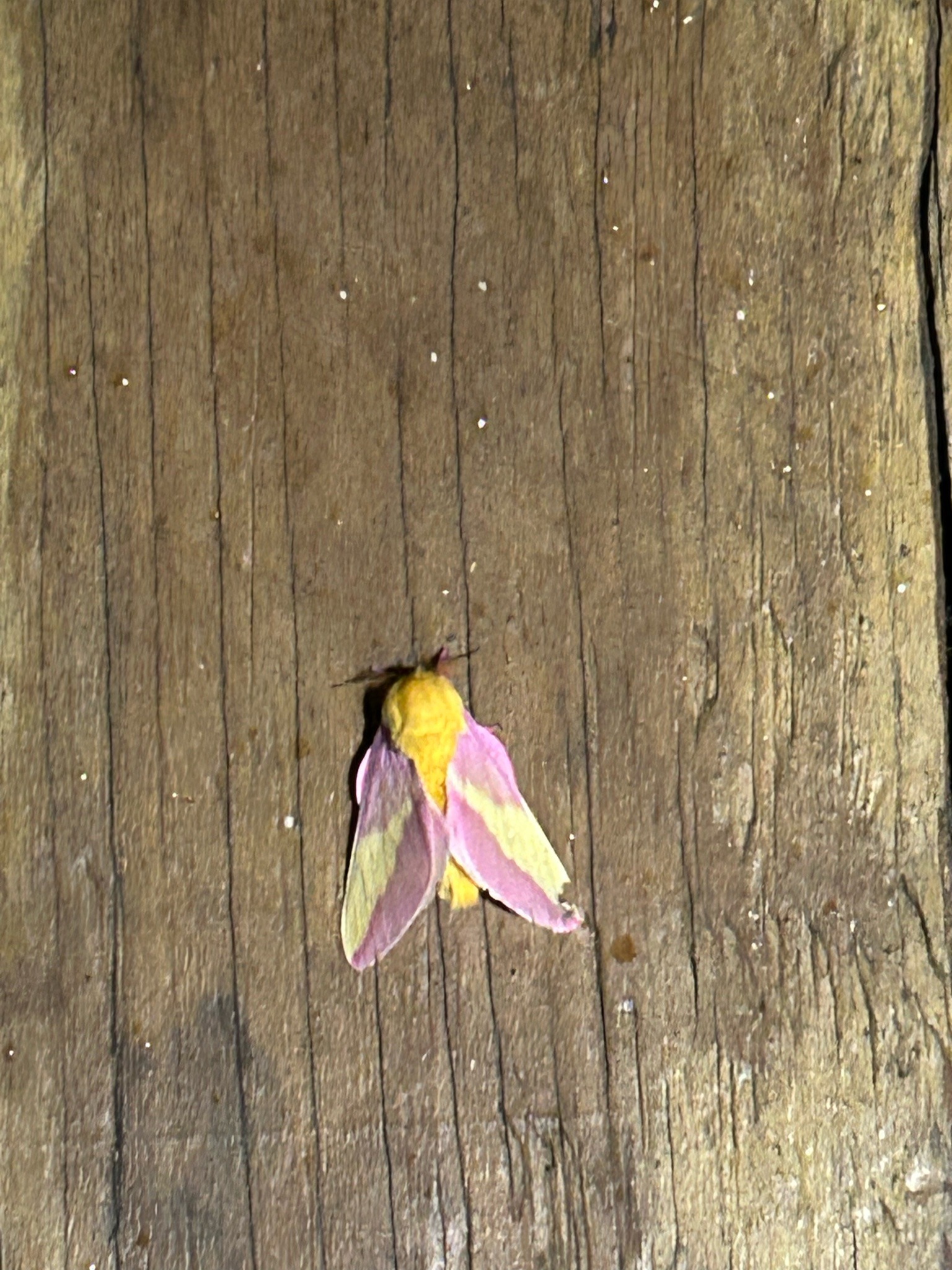
Community identification
Rosy Maple Moth
Dryocampa rubicunda
- Order & Family
- Lepidoptera: Saturniidae
- Size
- 32–55 mm (wingspan)
Natural Habitat
Deciduous forests, dominated by maple and oak trees, often found across Eastern North America.
Diet & Feeding
Larvae (Green-striped mapleworms) eat maple and sometimes oak leaves; adults do not eat as they lack functional mouthparts.
Behavior Patterns
Nocturnal; adults emerge in the late afternoon and mate at night. Females lay eggs in clusters on the underside of host leaves.
Risks & Benefits
Generally harmless to humans; larvae can occasionally cause minor defoliation of trees but rarely permanent damage. They serve as a food source for birds and bats.