
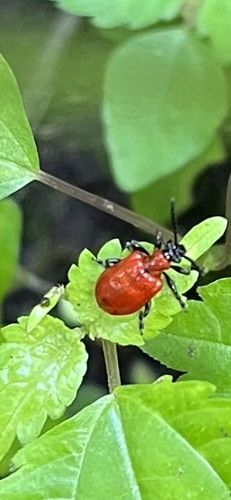
Lily Beetle
Lilioceris lilii
- Order & Family
- Order: Coleoptera, Family: Chrysomelidae (Leaf Beetles)
- Size
- Typically around 6-8 mm (0.24-0.31 inches) in length
Natural Habitat
Lily beetles are commonly found in gardens, horticultural settings, and natural areas where lilies and fritillaries grow. They are particularly prevalent in areas where these plants are cultivated, as they can quickly decimate entire plantings.
Diet & Feeding
Both adult lily beetles and their larvae primarily feed on the leaves, buds, and flowers of true lilies (genera Lilium and Fritillaria). They can also feed on other plants in the Liliaceae family, such as Solomon's Seal (Polygonatum) and Smilax, but lilies are their preferred host.
Behavior Patterns
Adult lily beetles are active during the day. They are known for their ability to drop to the ground and play dead when disturbed, making them difficult to catch. The larvae are often covered in their own excrement (frass) as a defense mechanism against predators. Both adults and larvae can cause significant damage to the host plants.
Risks & Benefits
The primary risk of lily beetles is their destructive impact on lily and fritillary plants. They are considered a significant pest by gardeners and horticulturists due to their ability to defoliate and kill plants. There are no known benefits of this insect; rather, they are a nuisance pest in many regions.