
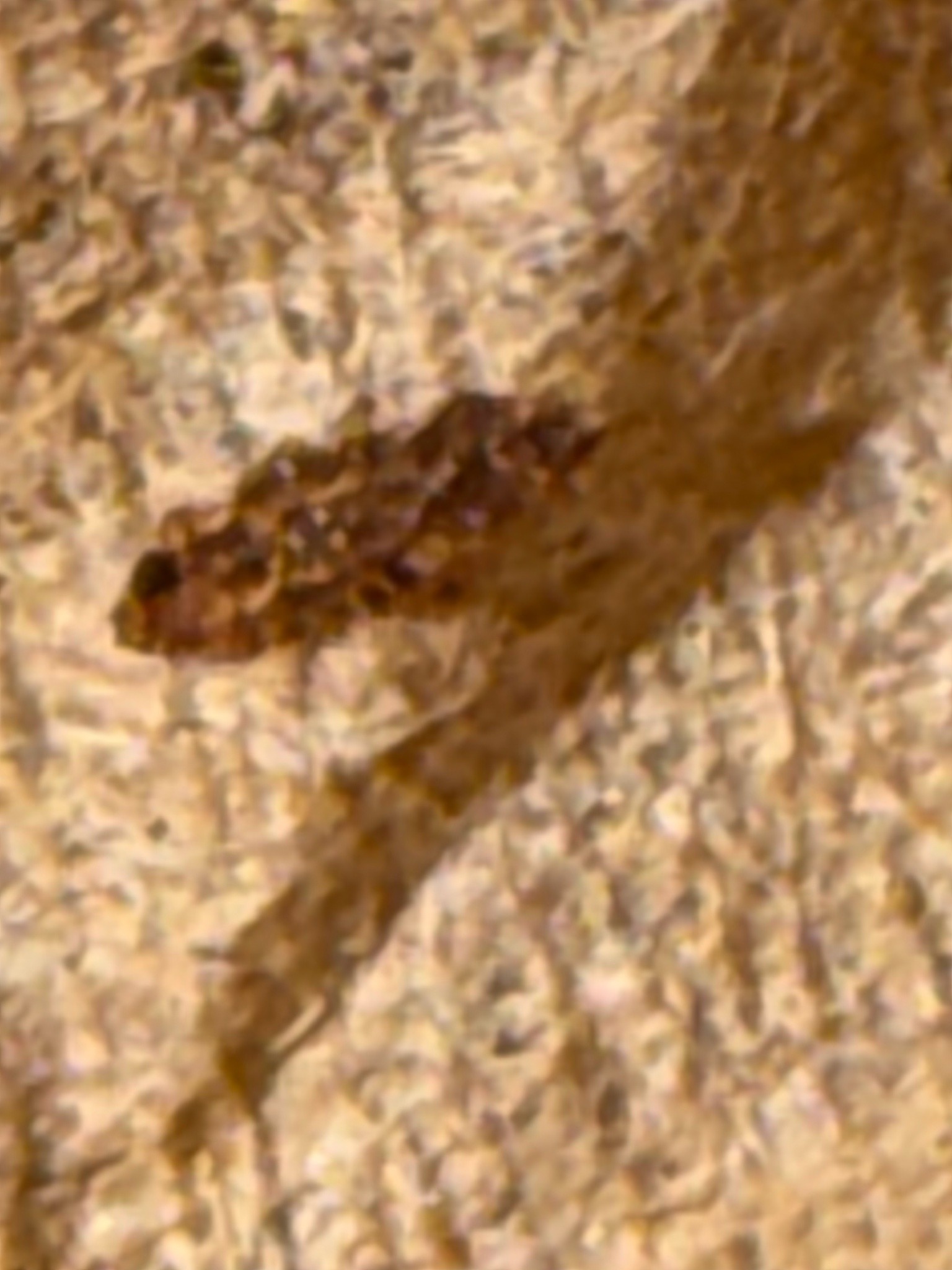
Community identification
Termite (likely worker or soldier)
Isoptera; species indeterminate
- Order & Family
- Blattodea (formerly Isoptera), family Termitidae or another termite family
- Size
- Typically 3–15 mm long, depending on caste and species.
Natural Habitat
Usually lives in soil, decaying wood, wall voids, or mud tubes; colonies occur in warm, humid environments. The pictured insect appears to be on or near wood or earthen material.
Diet & Feeding
Workers consume cellulose from wood, leaf litter, paper, and soil organic matter. Gut microbes help digest cellulose.
Behavior Patterns
Highly social and colony-dwelling, with workers feeding and caring for reproductives and young; soldiers defend the colony. Swarmers may emerge seasonally to mate and establish new colonies.
Risks & Benefits
Some species cause costly structural damage by consuming timber, but termites recycle dead plant material and enrich soil. A confirmed identification requires a clearer image showing body shape, antennae, and wings or caste features.