
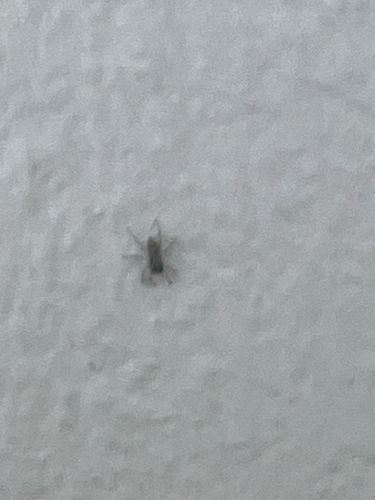
Cricket Nymph (likely Field Cricket Nymph or House Cricket Nymph)
Gryllus sp. (e.g., Gryllus pennsylvanicus or Acheta domesticus)
- Order & Family
- Order: Orthoptera, Family: Gryllidae
- Size
- Cricket nymphs vary in size depending on their developmental stage, typically ranging from a few millimeters to about 1-2 cm (0.08 to 0.8 inches).
Natural Habitat
Widely distributed globally, crickets (and their nymphs) thrive in various environments. Outdoors, they prefer moist, dark places such as under rocks, logs, leaf litter, in tall grass, or in cracks in the ground. Indoors, they can be found in basements, crawl spaces, kitchens, and other areas that offer warmth, harborage, and food.
Diet & Feeding
Omnivorous. Cricket nymphs feed on a variety of organic matter, including decaying plant material, fungi, small insects, and even animal remains. Inside homes, they may consume fabrics, paper, or food scraps.
Behavior Patterns
Cricket nymphs often molt several times as they grow, shedding their exoskeletons. They are primarily nocturnal, more active, and vocal during the night. They can be found in various environments, seeking shelter in cracks, under objects, or within vegetation. They communicate through chirping, although nymphs may chirp less frequently or differently than adults.
Risks & Benefits
Potential risks include property damage (chewing on fabrics, paper, or food), potential for disease transmission (though rare for common house/field crickets), and nuisance due to chirping, especially from adults. Benefits include serving as a food source for other animals (birds, reptiles, larger insects) and contributing to decomposition in ecosystems.