
Community identification
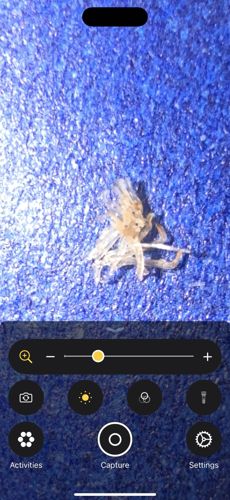
Spider (unidentified species' exoskeleton)
Araneae (order name)
- Order & Family
- Order: Araneae; Family: Multiple possibilities (e.g., Loxoscelidae or Cheiracanthiidae)
- Size
- Variable, typically 6 to 20 mm in body length depending on the specific genus and sex.
Natural Habitat
Found globally in terrestrial environments, commonly in dark, undisturbed areas like closets, basements, or garages when indoors.
Diet & Feeding
Carnivorous; they primarily hunt insects and other small arthropods using venom to immobilize prey.
Behavior Patterns
The image appears to show an exuvia (discarded exoskeleton) from the molting process. Spiders are often nocturnal and may be active hunters or web-builders depending on the species.
Risks & Benefits
Benefits: Provide natural pest control by eating flies and moths. Risks: While most are harmless, some species (like Brown Recluse) can possess medically significant venom; handle with caution if unidentified.