
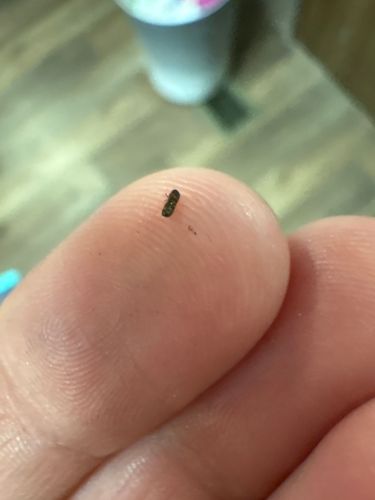
Dermestid Beetle (likely a Carpet Beetle or Larder Beetle)
Dermestes spp. (for Larder Beetles) or Anthrenus spp./Attagenus spp. (for Carpet Beetles)
- Order & Family
- Order: Coleoptera, Family: Dermestidae
- Size
- Typically small, ranging from 2 mm to 12 mm in length, depending on the species. The beetle in the image appears to be on the smaller end of this range, possibly 2-4 mm.
Natural Habitat
Dermestid beetles are commonly found in homes, museums, warehouses, and other places where dried organic materials are present. Larder beetles prefer areas with animal products such as larders, pantries, and pet food storage. Carpet beetles are more generalized and can be found in carpets, upholstered furniture, closets, and attics, feeding on natural fibers.
Diet & Feeding
Dermestid beetles are scavengers. Their diet typically includes dried animal and plant products. This can range from wool, silk, fur, leather, feathers, and dried meat (Larder Beetles), to dried plant materials, cereals, and pet food (Carpet Beetles). Some species also feed on museum specimens, stored grains, and even carpets.
Behavior Patterns
Dermestid beetle adults are attracted to light and are often found near windows. Larvae prefer dark, undisturbed areas. They undergo complete metamorphosis with egg, larval, pupal, and adult stages. The larvae are the most destructive stage, actively feeding on organic materials. Adults generally feed less, or on different materials, often pollen or nectar, depending on the species.
Risks & Benefits
Potential Risks: Dermestid beetles are considered pests as they can cause significant damage to stored products, natural fiber textiles, museum collections, and dried food items. They do not typically bite or pose direct health risks to humans. Potential Benefits: Some species are used in forensic entomology to estimate time of death due to their carrion-feeding habits. They are also used in museums to clean skeletons by consuming the remaining flesh.