
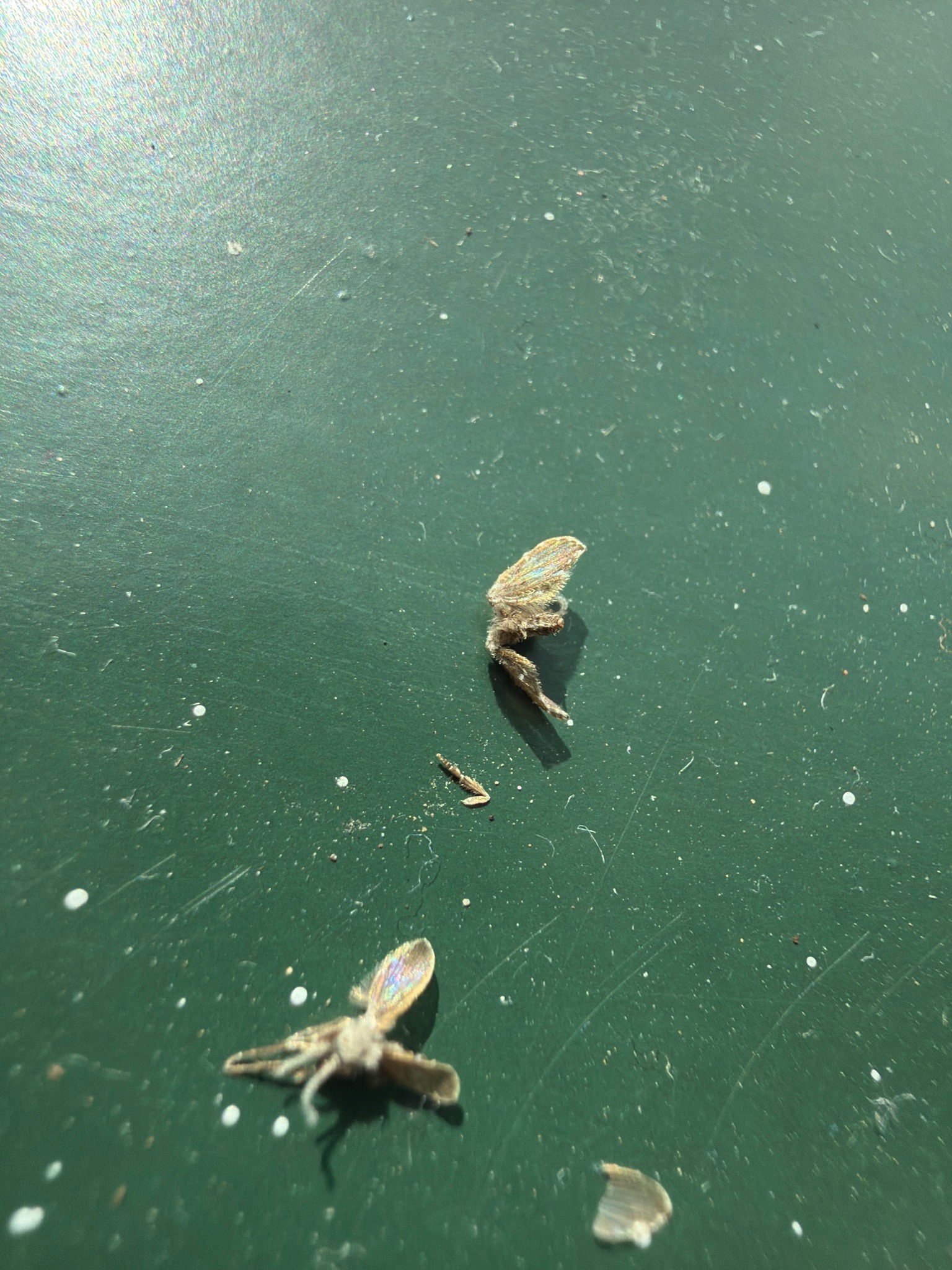
Community identification
Thrips
Order Thysanoptera; species uncertain from the photo
- Order & Family
- Thysanoptera; likely Thripidae
- Size
- Usually 0.5–2 mm long, though some species reach about 3 mm.
Natural Habitat
Plants, flowers, leaf litter, and sheltered indoor surfaces near infested vegetation; often found in warm, dry conditions.
Diet & Feeding
Most feed by rasping plant tissue and sucking cell contents; some eat fungi, pollen, or small arthropods.
Behavior Patterns
Adults and nymphs are slender, fast-moving insects with narrow, fringed wings; they may jump or fly weakly when disturbed. Eggs are inserted into plant tissue, followed by several immature stages and often pupation in soil or leaf litter.
Risks & Benefits
Plant-feeding species can scar leaves, flowers, and fruit and may transmit plant viruses; they are not dangerous to humans, though occasional bites cause minor irritation. Predatory thrips help suppress mites and other small pests.