
Community identification
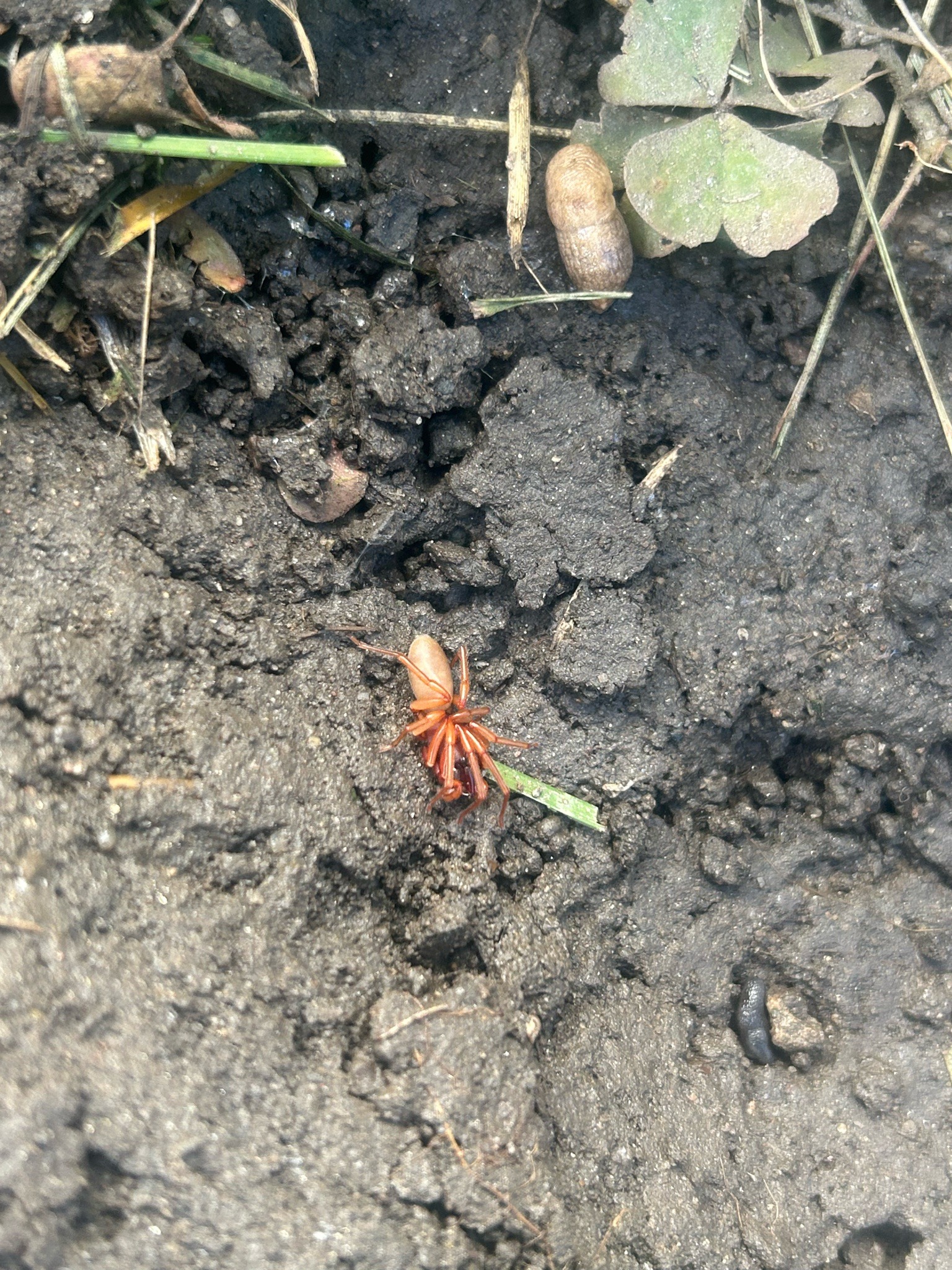
Woodlouse Hunter spider
Dysdera crocata
- Order & Family
- Order Araneae, Family Dysderidae
- Size
- 10 to 15 mm (body length, excluding legs)
Natural Habitat
Found under logs, rocks, bricks, and in damp places like leaf litter or basements and gardens, particularly where its prey (pillbugs) is abundant.
Diet & Feeding
Primarily woodlice (sowbugs and pillbugs), though it may occasionally eat other small invertebrates.
Behavior Patterns
Nocturnal hunter that does not build a web to catch prey; instead, it uses its large, powerful chelicerae (fangs) to pierce the tough exoskeleton of roly-polies. They spend the day in silk retreats.
Risks & Benefits
Benefits the ecosystem by controlling pillbug populations. While its large fangs can pierce human skin and cause a painful bite similar to a bee sting, its venom is not medically significant to humans.