
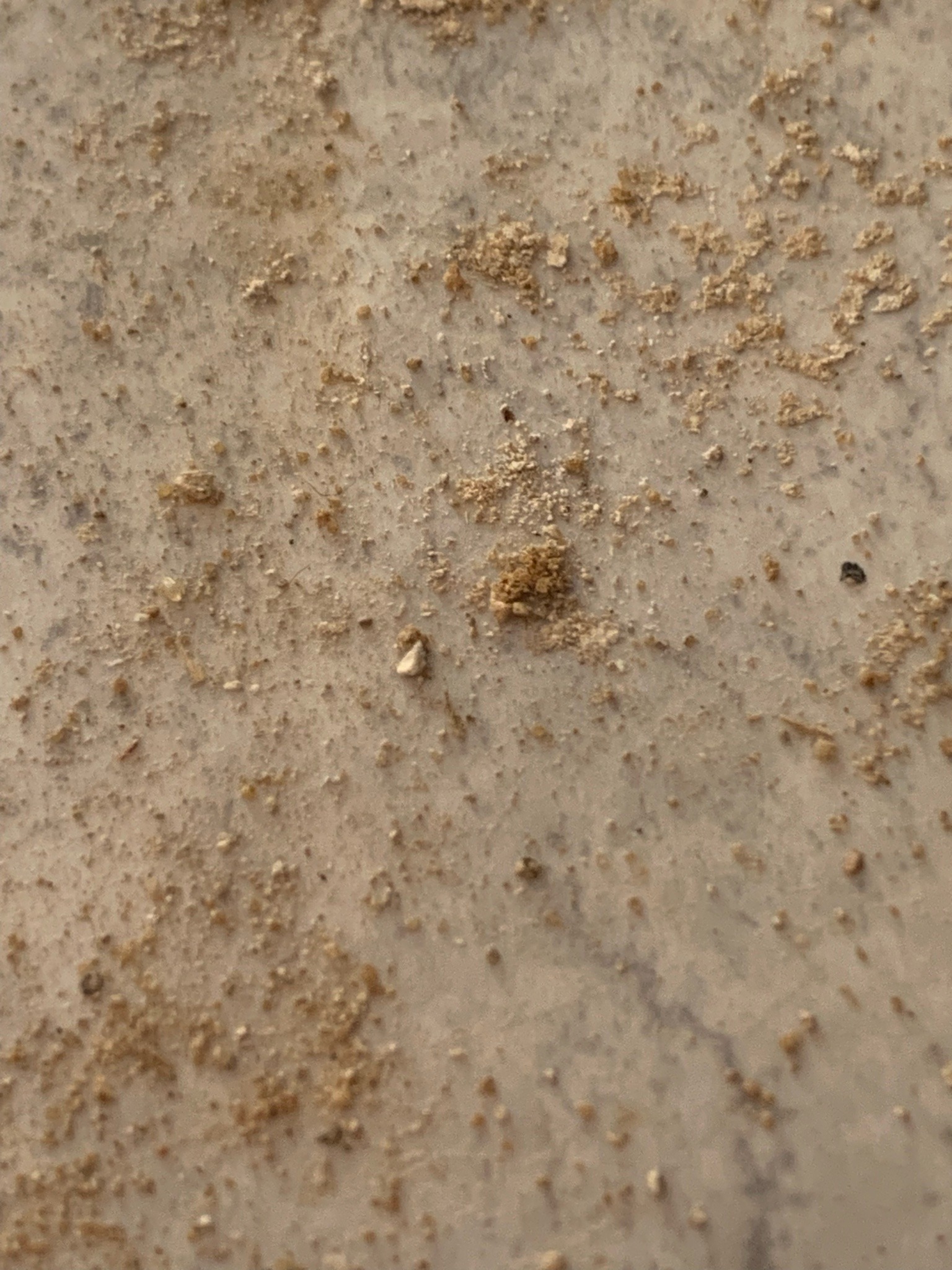
Community identification
Springtails (likely)
Collembola; exact species cannot be determined from this image
- Order & Family
- Collembola; family uncertain
- Size
- Typically 0.5–6 mm long; the visible specimens appear only a few millimeters or smaller.
Natural Habitat
Moist soil, leaf litter, decaying wood, compost, and damp building surfaces. The clustered debris suggests a humid, organic-rich microhabitat.
Diet & Feeding
Fungi, algae, bacteria, decaying plant matter, and other microorganisms; they do not typically bite or feed on people.
Behavior Patterns
Often occur in dense groups and increase rapidly under damp conditions. Many species jump using a forked abdominal springing organ called a furcula.
Risks & Benefits
Harmless to humans, pets, and structures, though large indoor numbers indicate excess moisture. They recycle organic matter and help regulate fungi and microbial communities.