
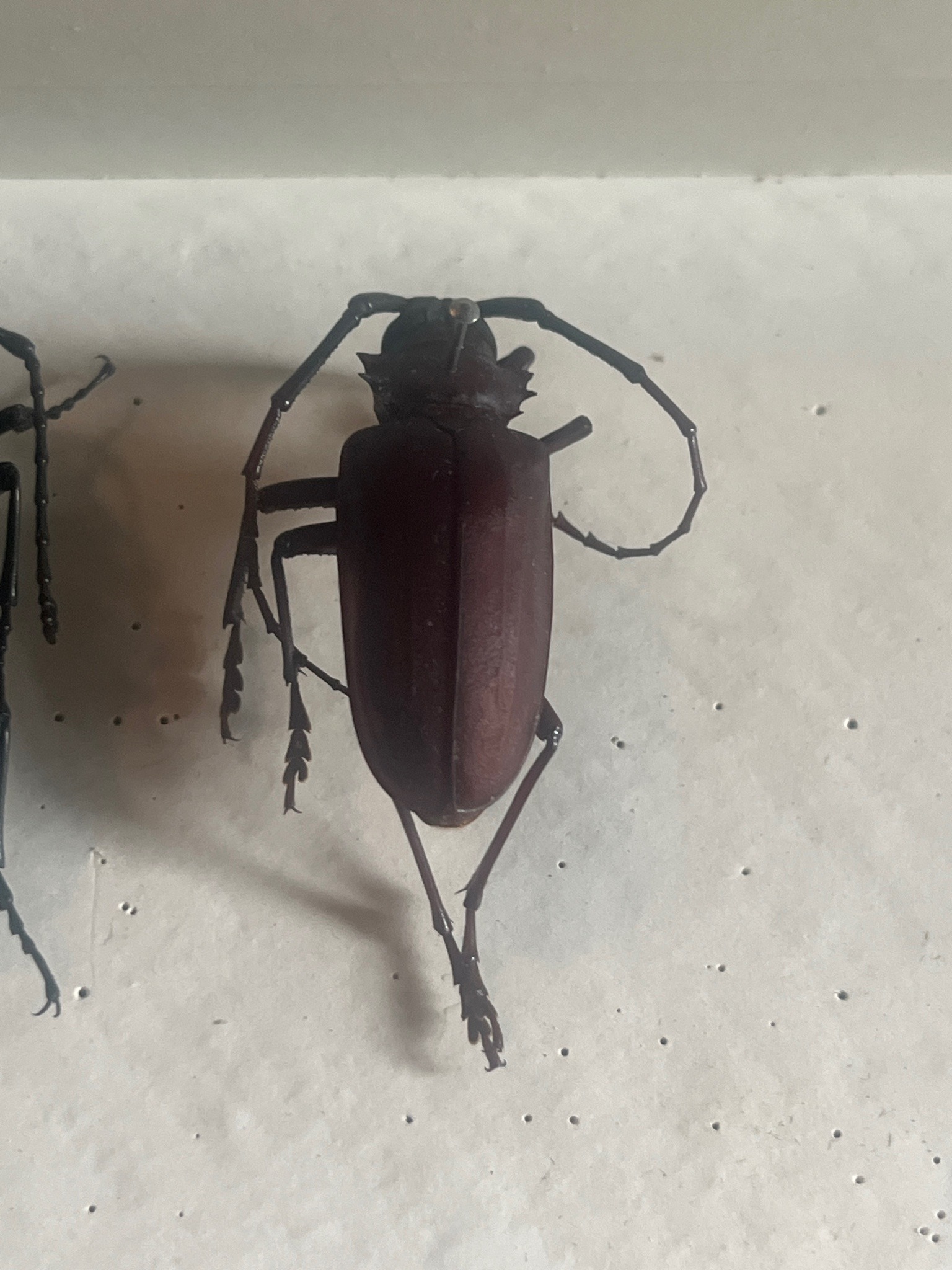
Community identification
Longhorn beetle (likely a prionine longhorn)
Prionus sp. (species uncertain from image)
- Order & Family
- Coleoptera, Cerambycidae
- Size
- Typically 25–70 mm long, excluding antennae; this specimen appears roughly 40–50 mm.
Natural Habitat
Woodlands, forest edges, and areas containing dead or dying hardwood; adults may be attracted to lights. Larvae live inside roots, stumps, or buried wood.
Diet & Feeding
Larvae feed on woody tissue, especially roots and decaying or stressed hardwood. Adults generally feed little or may consume sap, foliage, or bark.
Behavior Patterns
Mostly nocturnal; males often have strongly serrated antennae and may locate females by scent. Larvae develop underground or within wood for several years before pupating.
Risks & Benefits
Harmless to people and incapable of stinging, though adults can pinch if handled. Larvae help decompose woody material, but some species damage tree roots and timber.