
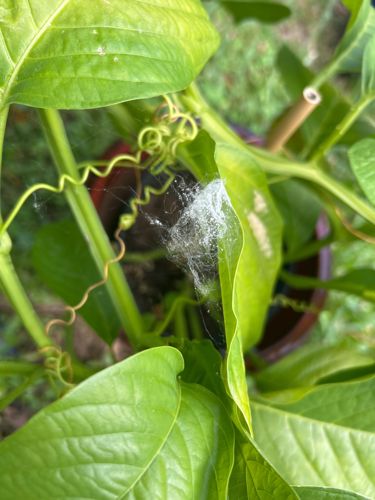
Spider Mite
Tetranychus urticae (Two-spotted spider mite) is a common example, though many species exist.
- Order & Family
- Order: Trombidiformes, Family: Tetranychidae
- Size
- Typically very small, ranging from 0.4 to 1.0 mm in length. They are barely visible to the naked eye.
Natural Habitat
Spider mites are found globally and thrive in a variety of environments, particularly warm and dry conditions. They are common pests in gardens, greenhouses, and on houseplants. They typically reside on the undersides of leaves where they are more protected.
Diet & Feeding
Spider mites feed on plant cells by piercing the leaf tissue and sucking out the chlorophyll. They are polyphagous, meaning they feed on a wide variety of plants, including many common garden and house plants.
Behavior Patterns
Spider mites reproduce quickly, especially in warm, dry conditions. They spin fine webs, primarily on the undersides of leaves, which serve to protect them and their eggs from predators and environmental factors. Infested leaves may appear stippled or discolored, and severe infestations can lead to leaf drop and plant death. They move between plants by crawling or being carried by wind.
Risks & Benefits
Risks: Spider mites are significant agricultural and horticultural pests, causing damage to crops and ornamental plants by feeding on plant sap. Heavy infestations can lead to reduced plant vigor, defoliation, and even plant death. They can be particularly challenging to control due to their rapid reproduction and potential for pesticide resistance. Benefits: While generally considered pests, spider mites are a food source for various predatory insects and mites, helping to maintain ecological balance in some natural settings. Some species are also used in scientific research to study plant-herbivore interactions and pest management strategies.