
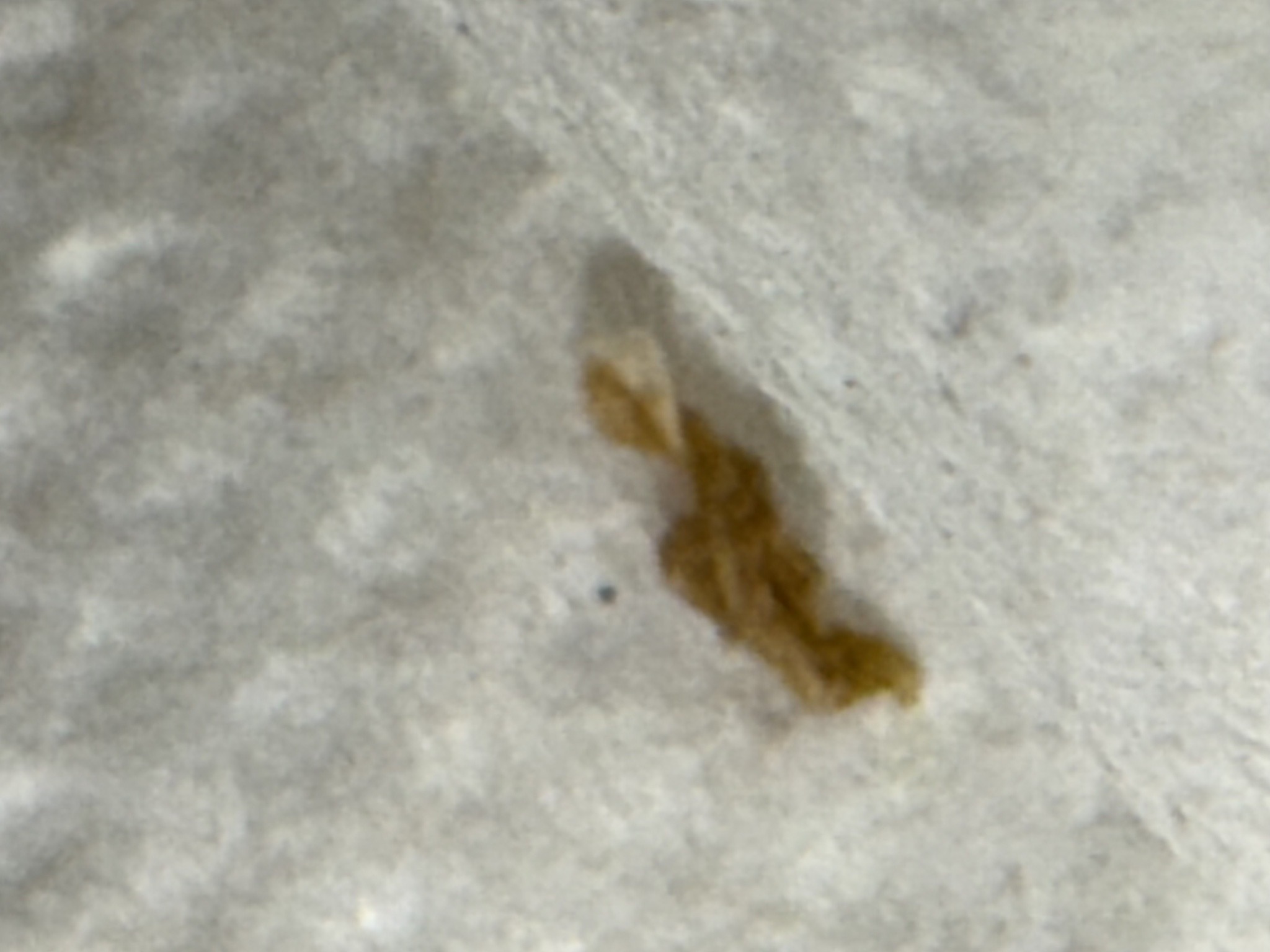
Unidentifiable from image; likely a small moth larva or case-bearing clothes-moth larval case
Possibly Tineidae, genus *Tinea* or *Monopis*; species cannot be determined from this photograph
- Order & Family
- Lepidoptera; Tineidae (tentative)
- Size
- Typically 3–10 mm for the larva or portable case, depending on species and development.
Natural Habitat
Indoors, especially in dark, undisturbed areas such as closets, carpets, upholstery, and storage spaces; also found in nests and animal-fiber debris.
Diet & Feeding
Larvae consume keratin-containing materials such as wool, fur, feathers, hair, and lint; adults generally do not feed and are not responsible for damage.
Behavior Patterns
Larvae avoid light and may live inside a silken, fiber-covered case that they carry while feeding. They pupate in sheltered locations; adults are small, weak-flying moths.
Risks & Benefits
Not dangerous to people, but infestations can damage woolens, furs, carpets, and other natural fibers. They contribute to decomposition outdoors, while indoor presence indicates stored-fiber debris or an infestation.