
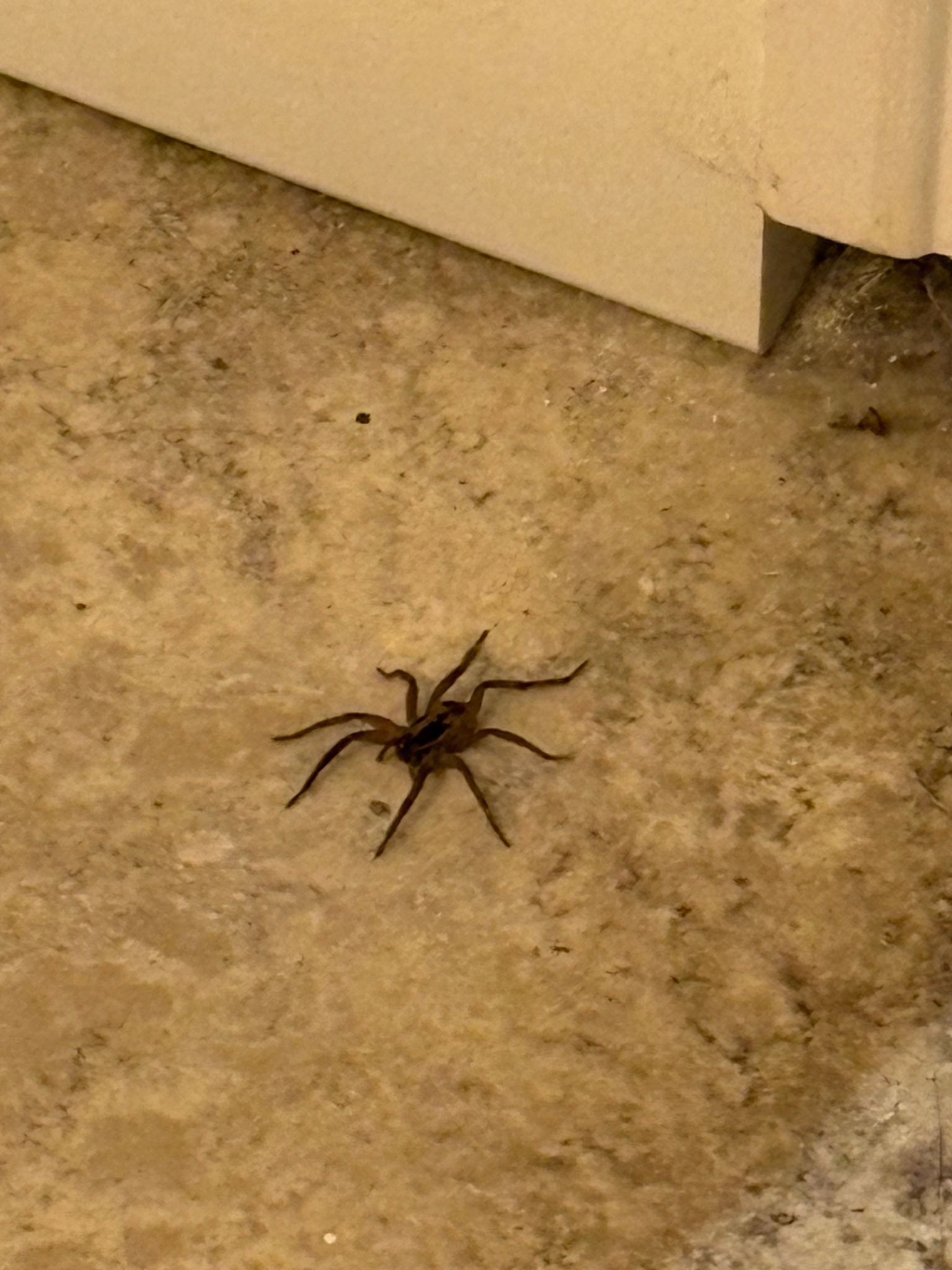
Community identification
Wolf Spider
Hogna carolinensis (Typical of the genus)
- Order & Family
- Araneae: Lycosidae
- Size
- 10 to 35 mm (0.4 to 1.38 inches) in body length.
Natural Habitat
Grassy areas, gardens, leaf litter, and occasionally indoors near baseboards or in basements.
Diet & Feeding
Mainly insects, including crickets, ants, and beetles; they are active hunters that do not spin webs for prey.
Behavior Patterns
Solitary, nocturnal hunters with excellent eyesight. Females are known for carrying egg sacs on their spinnerets and spiderlings on their backs.
Risks & Benefits
Benefits the ecosystem by controlling pest populations. They are not aggressive but may bite if threatened; the venom is typically mild to humans, similar to a bee sting.