
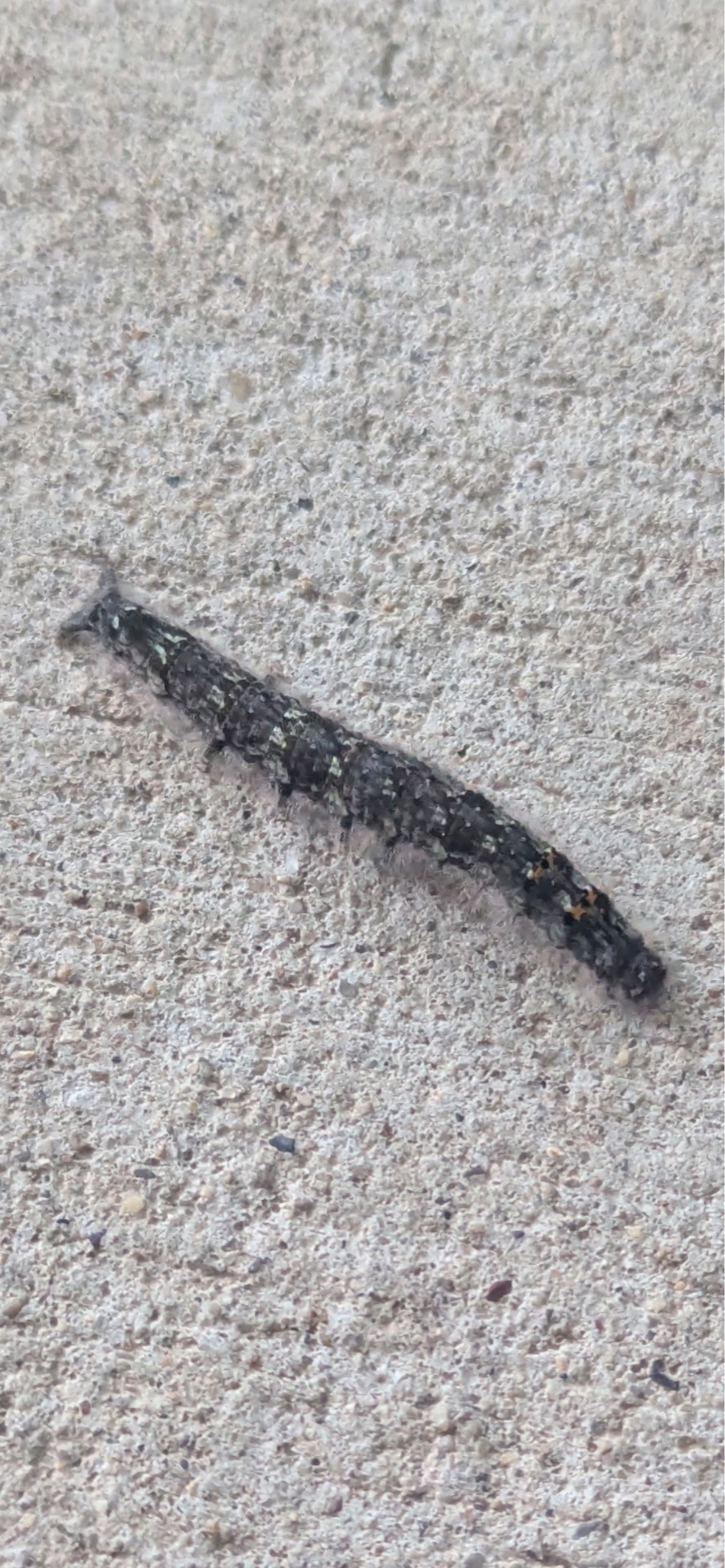
Community identification
Case-bearing moth larva (plaster bagworm)
Phereoeca uterella (likely)
- Order & Family
- Lepidoptera; family Tineidae
- Size
- Larva and case typically 8–15 mm long, occasionally reaching about 20 mm.
Natural Habitat
Humid indoor areas, sheltered walls, ceilings, porches, and outdoor surfaces where its portable case can remain attached. Common in tropical and subtropical regions.
Diet & Feeding
The larva feeds mainly on spider webs, wool, hair, dead insects, and other keratin-containing debris; it generally does not eat living fabric aggressively.
Behavior Patterns
It lives inside a tube-like silken case covered with lint and debris, extending its head to crawl and feed. Mature larvae attach the case to a surface, pupate inside, and emerge as small gray moths.
Risks & Benefits
Usually harmless to people and pets, with no sting or bite. It helps recycle organic debris, though larger indoor populations may damage woolens, furs, feathers, or stored textiles.