
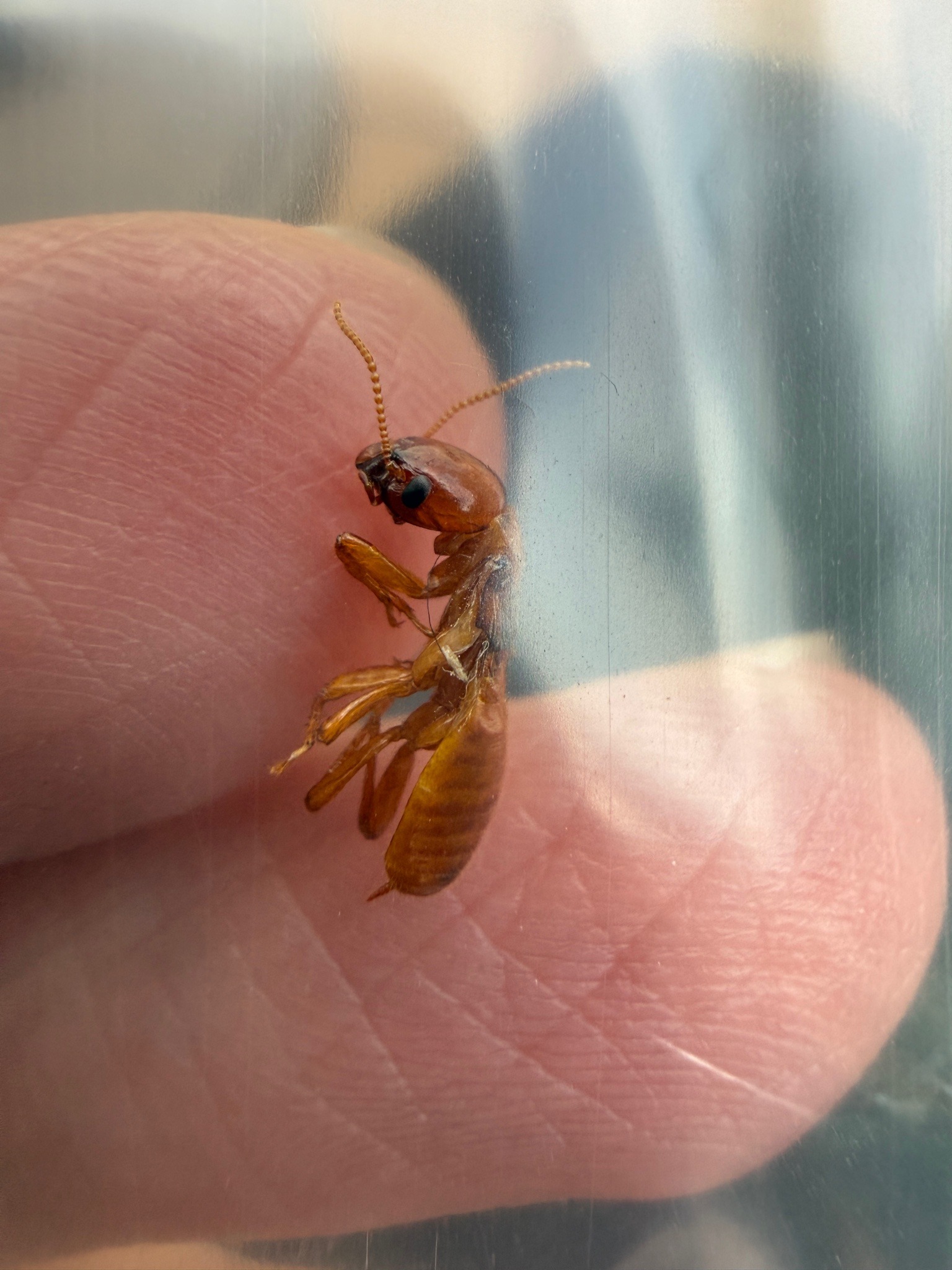
Community identification
Termite (likely a reproductive or worker-associated individual)
Isoptera; likely *Reticulitermes* or *Coptotermes* species
- Order & Family
- Blattodea (formerly Isoptera), family Rhinotermitidae likely
- Size
- Approximately 6–12 mm for workers or soldiers; winged reproductives are usually 8–12 mm excluding wings.
Natural Habitat
Soil, decaying wood, tree stumps, wall voids, and damp structural timber. Subterranean species commonly forage through concealed mud tubes.
Diet & Feeding
Feeds mainly on cellulose from wood, leaf litter, paper, and other plant debris, using gut microbes to digest it.
Behavior Patterns
Highly social, living in colonies with workers, soldiers, and reproductives. Colonies typically remain hidden; winged adults swarm to mate and establish new colonies, while workers continuously tunnel and feed.
Risks & Benefits
Can cause serious structural damage when colonies infest buildings. Ecologically, termites recycle dead wood, aerate soil, and return nutrients to ecosystems.