
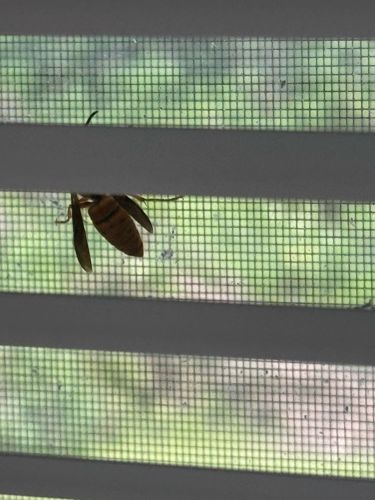
Community identification
European Hornet
Vespa crabro
- Order & Family
- Order: Hymenoptera, Family: Vespidae
- Size
- 25 to 35 mm (approx. 1 to 1.4 inches)
Natural Habitat
Woodlands, gardens, and semi-rural areas; often nests in hollow trees, wall voids, or attics.
Diet & Feeding
Carnivorous as larvae (fed insects like flies and moths); adults consume nectar, fruit juices, and tree sap.
Behavior Patterns
Unlike many wasps, they are active both day and night and are attracted to light. They build large paper nests and are eusocial with a queen and workers.
Risks & Benefits
Benefits the ecosystem by controlling pest insect populations. Risks include painful stings if the nest is disturbed, though they are generally less aggressive than smaller yellowjackets.