
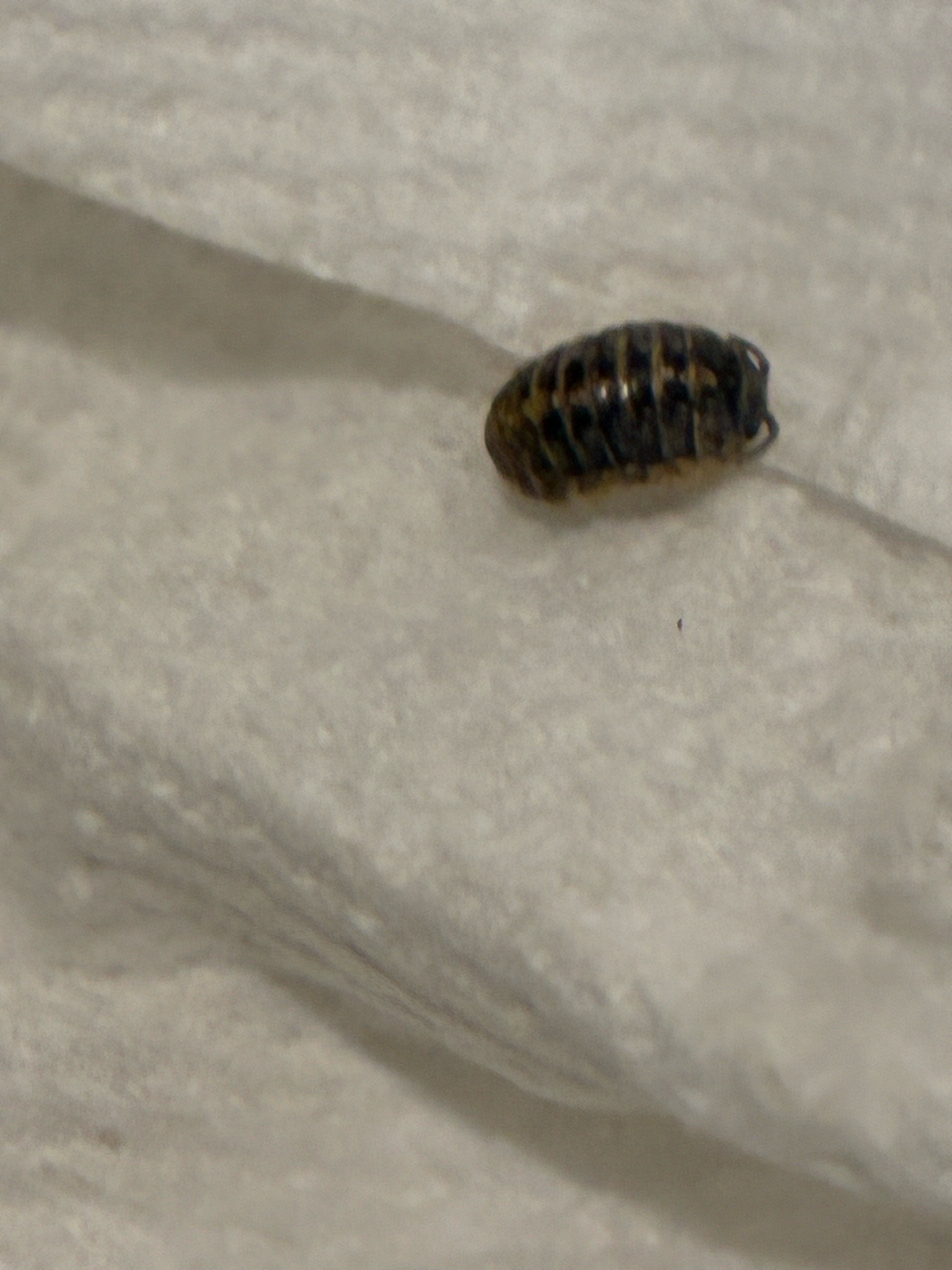
Community identification
Common Pill Bug
Armadillidium vulgare
- Order & Family
- Order Isopoda, Family Armadillidiidae
- Size
- 8.5 to 18 mm (approx. 0.3 to 0.7 inches) in length.
Natural Habitat
Damp environments such as leaf litter, under rocks, logs, and in soil; they are terrestrial crustaceans that require moisture to breathe through gill-like structures.
Diet & Feeding
Decomposer (detritivore) that primarily eats decaying organic matter, such as rotting leaves, wood, and occasionally tender plant parts.
Behavior Patterns
Known for 'conglobation' (rolling into a tight ball when threatened). They are nocturnal and gregarious, often found in groups to conserve moisture. Mothers carry eggs in a fluid-filled pouch called a marsupium.
Risks & Benefits
Harmless to humans; they do not bite or sting. They provide significant ecological benefits by nutrient cycling and soil aeration, though they can occasionally damage young seedlings in gardens.