
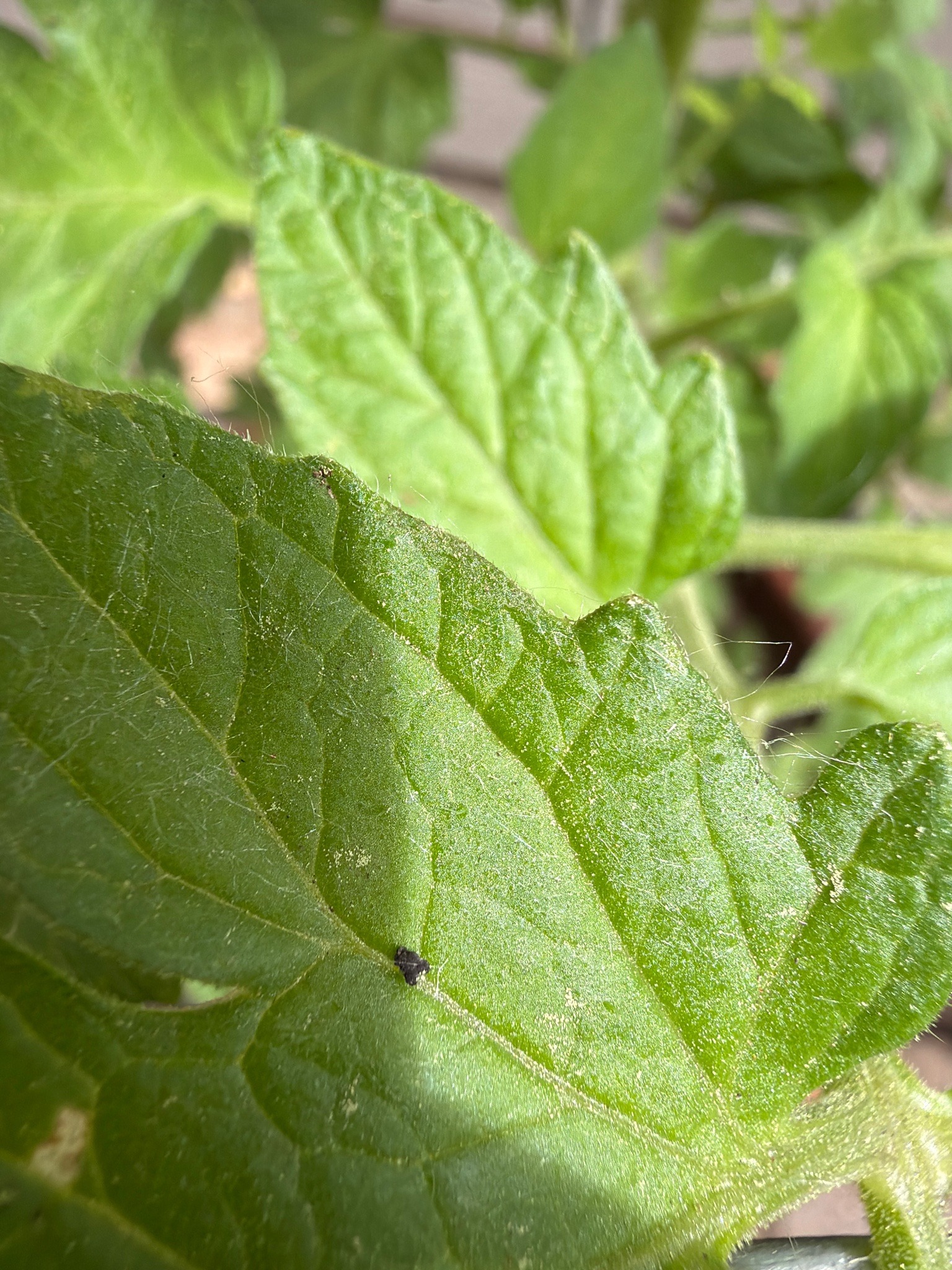
Community identification
Tomato Spider Mite
Tetranychus urticae
- Order & Family
- Order Trombidiformes, Family Tetranychidae
- Size
- 0.3 mm to 0.5 mm (nearly microscopic, appearing as tiny moving dots)
Natural Habitat
Typically found on the undersides of leaves in vegetable gardens, greenhouses, and residential landscapes, especially on tomato plants.
Diet & Feeding
Plant sap; they use needle-like mouthparts to pierce individual plant cells and suck out the contents, causing stippling or yellowing of leaves.
Behavior Patterns
They produce fine silk webbing to protect the colony and eggs. They reproduce rapidly in hot, dry conditions and can complete a life cycle in as little as 5 to 20 days.
Risks & Benefits
Risks include significant damage to crops and ornamental plants, potentially leading to leaf drop and plant death. They offer no notable benefits to humans or ecosystems as they are primary agricultural pests.