
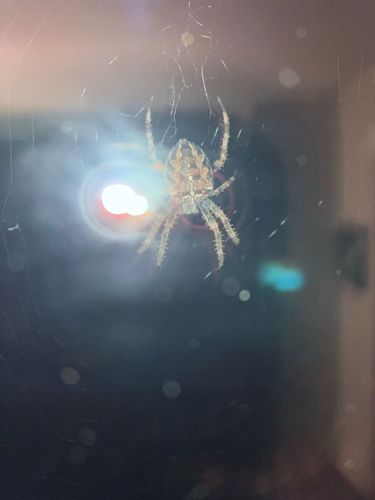
European Garden Spider, Cross Orbweaver, Diadem Spider
Araneus diadematus
- Order & Family
- Order: Araneae, Family: Araneidae
- Size
- Females: 10-18 mm (body length); Males: 4-8 mm (body length)
Natural Habitat
Common in gardens, woodlands, meadows, and urban areas. They prefer to build their webs between shrubs, tall grasses, fences, and in the eaves of buildings.
Diet & Feeding
Mainly relies on insects caught in its orb web, including flies, mosquitoes, moths, and other small flying insects. They inject venom to paralyze prey and then wrap it in silk before consuming it or storing it for later.
Behavior Patterns
The European garden spider is known for building large, intricate orb webs, often several feet in diameter. They are primarily nocturnal or crepuscular, often rebuilding or repairing their webs daily, especially in the early morning. They typically hang head-down in the center of their web or hide nearby with a signal line to detect vibrations. Females are larger than males, and after mating, the female may eat the male. They lay eggs in a silken sac, which is hidden in a sheltered location.
Risks & Benefits
Risks: This spider is venomous, but its venom is not considered dangerous to humans. A bite might cause mild pain, swelling, and redness comparable to a bee sting. Benefits: They are excellent pest control, consuming a large number of nuisance insects like flies and mosquitoes, thus benefiting gardens and ecosystems.