
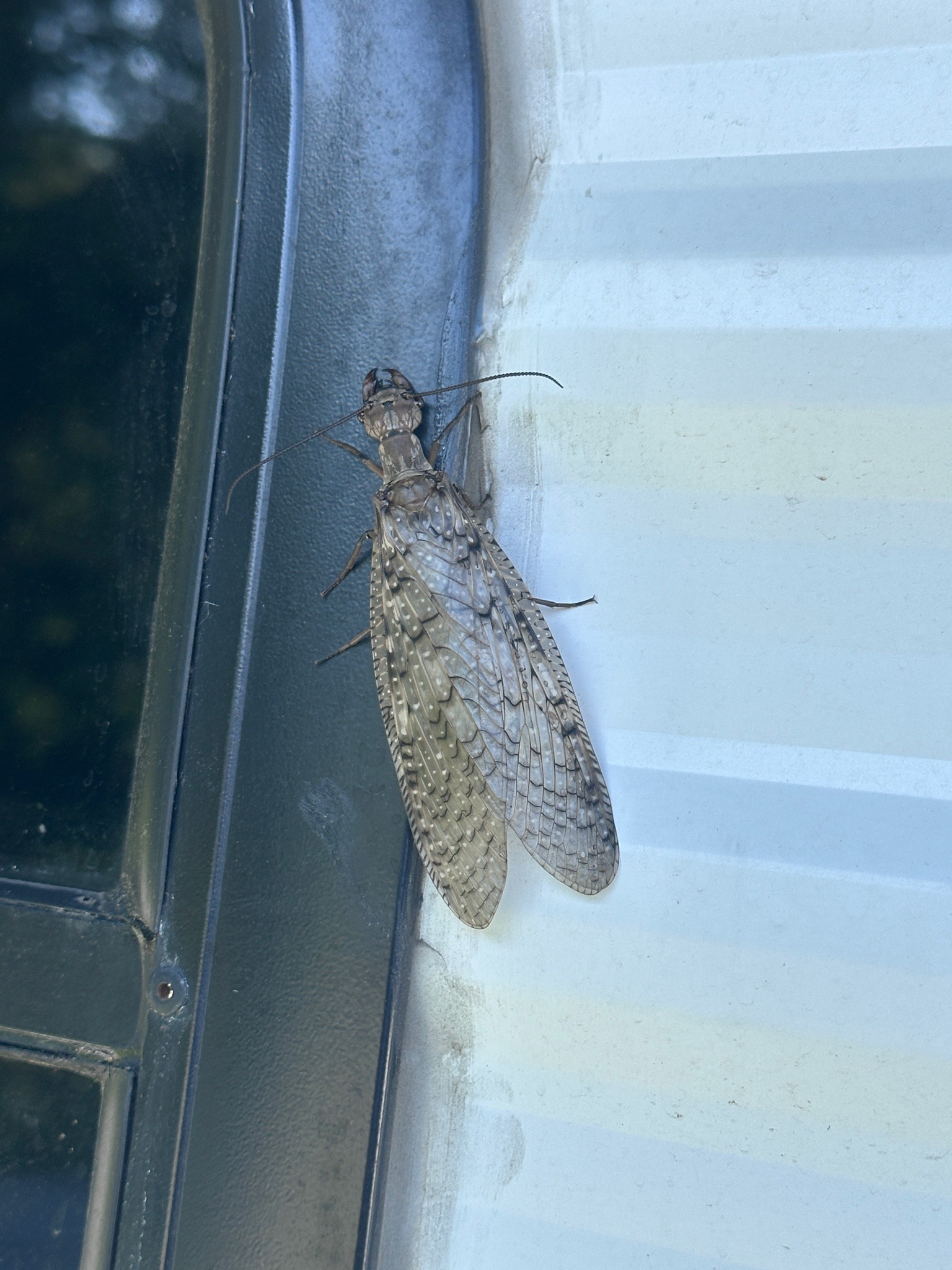
Community identification
Eastern Dobsonfly (Female)
Corydalus cornutus
- Order & Family
- Megaloptera: Corydalidae
- Size
- Wingspan up to 5 inches (12.5 cm); body length up to 3 inches
Natural Habitat
Near clean, fast-moving freshwater streams and rivers. They are often attracted to porch lights at night.
Diet & Feeding
Adults may feed on nectar or not eat at all; larvae (hellgrammites) are predatory, eating aquatic insects and small fish.
Behavior Patterns
Adults are nocturnal and short-lived. Females lay eggs on rocks or leaves overhanging water. Larvae spend several years underwater before pupating on land.
Risks & Benefits
Benefits: Larvae are indicators of good water quality and popular fish bait. Risks: Females (pictured) have strong mandibles and can deliver a painful bite if handled; they are not venomous.