
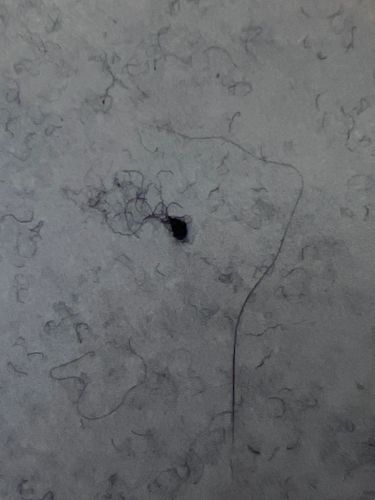
Case-bearing Clothes Moth Larva
Tinea pellionella
- Order & Family
- Lepidoptera (moths and butterflies), Tineidae (fungus moths, clothes moths, and allies)
- Size
- Larvae grow up to 10-14 mm (0.4-0.55 inches) in length, while adults are typically 10-14 mm (0.4-0.55 inches) wingspan.
Natural Habitat
Indoors, particularly in dark, undisturbed areas such as closets, attics, beneath furniture, and in storage boxes. They prefer materials of animal origin.
Diet & Feeding
Keratin-containing materials, primarily animal fibers such as wool, silk, fur, feathers, and felt. They can also feed on lint, dust, and synthetic fibers if soiled with oils or food particles.
Behavior Patterns
The larva constructs a silken case, often incorporating fragments of the material it is feeding on, allowing it to remain camouflaged. It carries this case with it as it moves and feeds. When ready to pupate, the larva usually attaches its case to a surface in a sheltered location. Adults are weak fliers and prefer to run or hop; they are often seen near infested items.
Risks & Benefits
Potential risks: Significant household pests causing damage to clothing, carpets, upholstered furniture, and stored textiles made of natural fibers. They do not bite or transmit diseases. Benefits: None known for humans; in natural environments, they may contribute to decomposition of animal remains.