
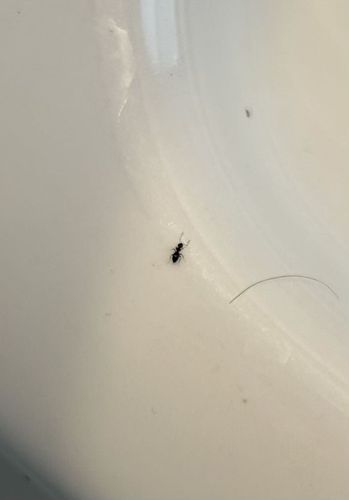
Community identification
Little Black Ant
Monomorium minimum
- Order & Family
- Order: Hymenoptera, Family: Formicidae
- Size
- Workers are very small, typically 1.5 to 2 mm in length.
Natural Habitat
Nests in woodwork, decaying wood, masonry, and soil; frequently enters homes through cracks and crevices searching for food and water, often found in kitchens and bathrooms.
Diet & Feeding
Omnivorous scavengers; they feed on sweets, meats, grease, insects, and plant secretions like honeydew.
Behavior Patterns
Highly adaptable social insects that form multiple-queen colonies. They forage in organized trails along edges (like baseboards or counter edges) and can be seen in large numbers when a food source is found.
Risks & Benefits
Risks: Nuisance pest in homes, contaminating food prep areas; they possess a stinger but it is generally too small to effectively penetrate human skin. Benefits: Scavengers that help clean up organic debris and dead insects in the ecosystem.