
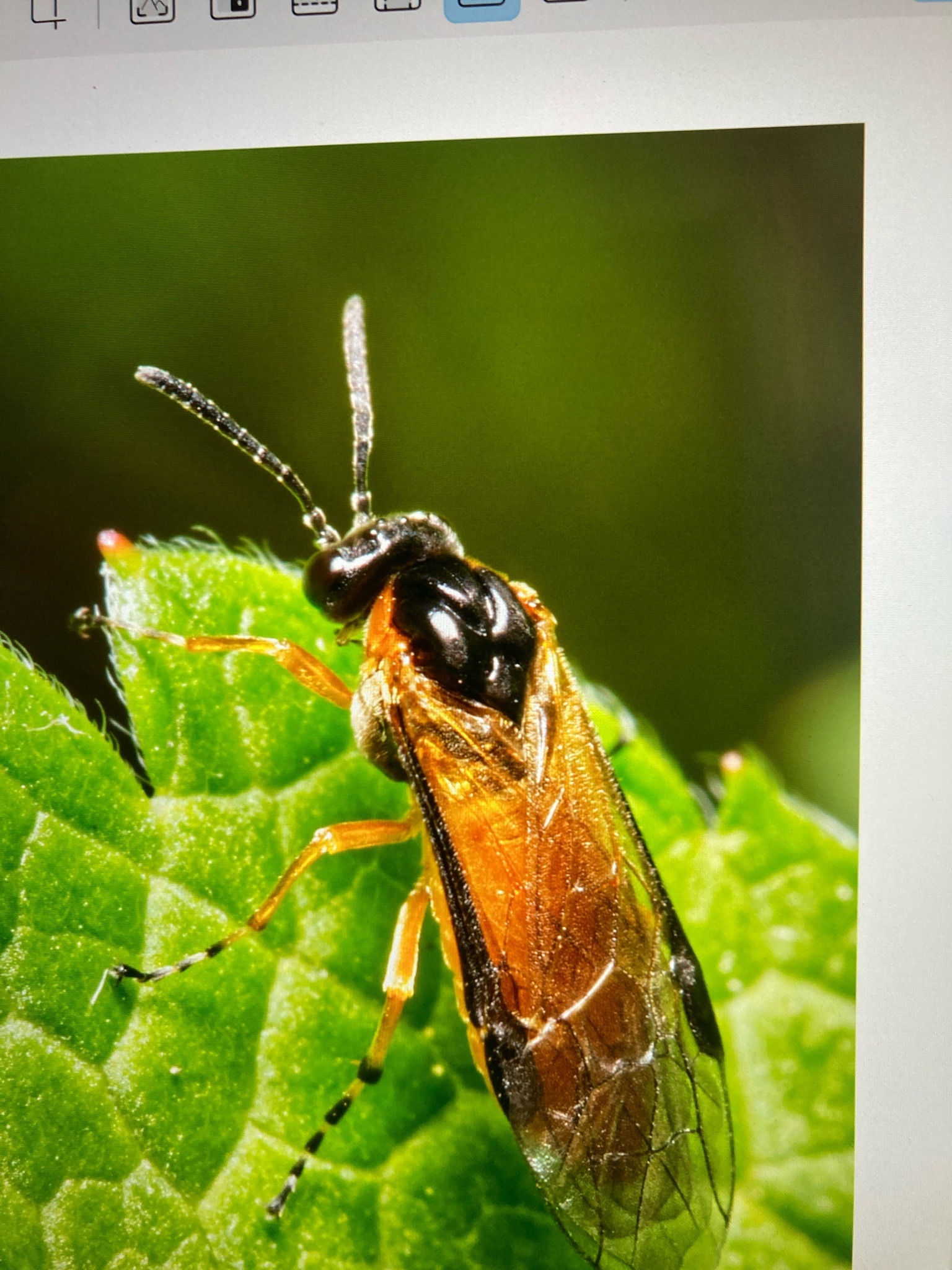
Community identification
Birch Sawfly
Arge pullata
- Order & Family
- Hymenoptera: Argidae
- Size
- 10 to 12 mm in length
Natural Habitat
Open woodlands, gardens, and areas where birch trees are prevalent throughout Europe and Asia.
Diet & Feeding
Larvae feed on the leaves of birch trees (Betula spp.), while adults typically feed on nectar and pollen.
Behavior Patterns
Adults are most active during early summer. Females use a saw-like ovipositor to cut slits in leaves and deposit eggs. Larvae often feed gregariously on leaf margins, and the species undergoes a complete metamorphosis (egg, larva, pupa, adult).
Risks & Benefits
They can cause localized defoliation of birch trees, which is a risk to forestry and ornamental plants; however, they do not sting humans. They serve as a food source for birds and parasitic wasps, contributing to ecosystem biodiversity.