
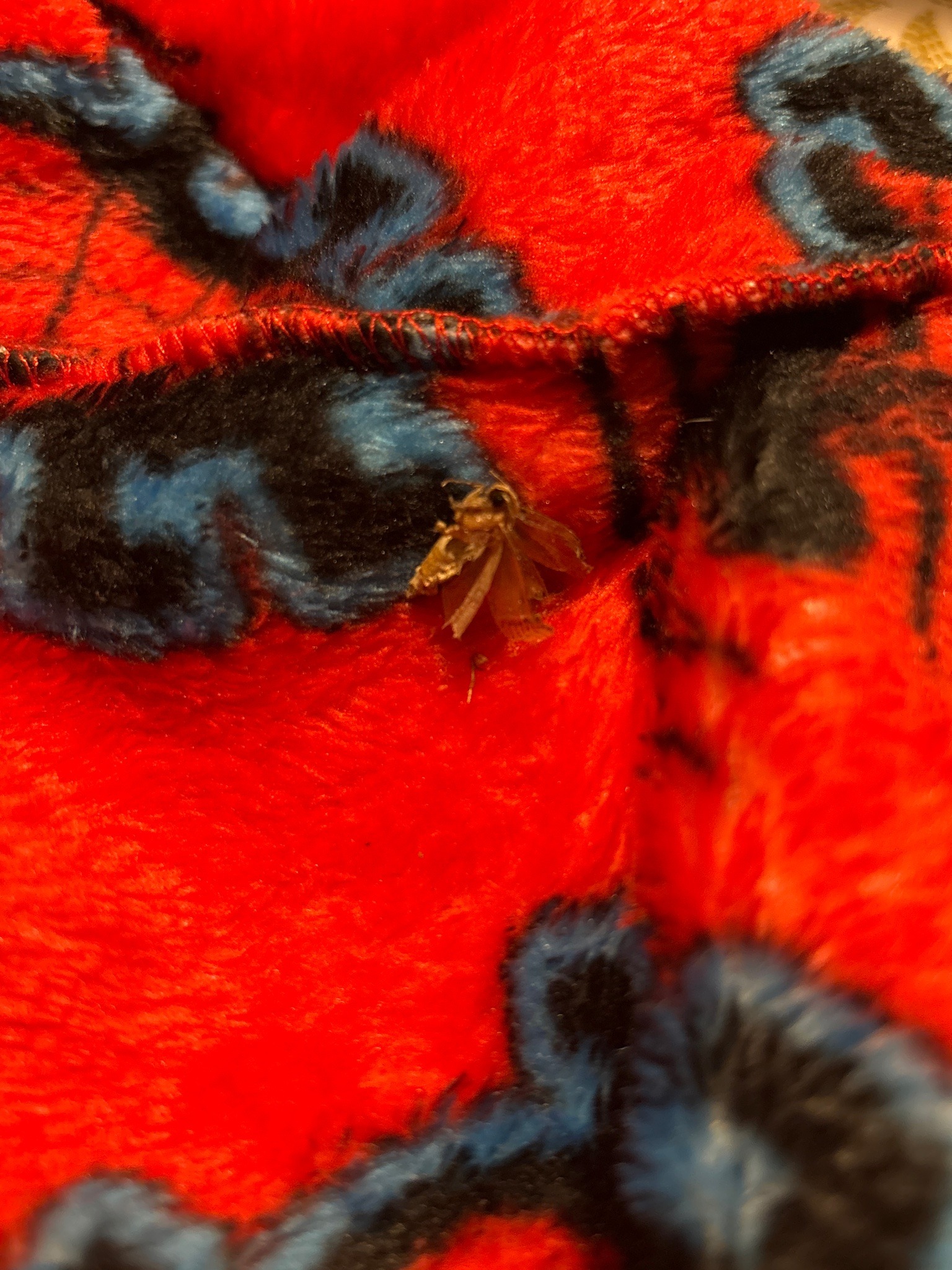
Unidentified small moth (likely a tineid or micro-moth)
Lepidoptera; species indeterminate from the image
- Order & Family
- Order Lepidoptera; family uncertain, possibly Tineidae
- Size
- Approximately 5–12 mm wingspan, based on the photograph.
Natural Habitat
Often found indoors around wool, fur, carpets, and other animal-fiber textiles; related species also inhabit leaf litter and stored organic material.
Diet & Feeding
Adults generally take little or no food. Larvae of clothes-moth relatives consume keratin-rich fibers such as wool, fur, feathers, and shed hair; other micro-moth larvae eat plants or detritus.
Behavior Patterns
Typically nocturnal and weak-flying, hiding in dark crevices or among fabric during the day. Larvae may live inside silken cases or tubes and can leave irregular textile damage.
Risks & Benefits
Adults do not bite or sting and pose no direct human danger. If it is a clothes-moth relative, larvae can damage natural-fiber clothing, while moths generally contribute to decomposition and serve as prey for other animals.