
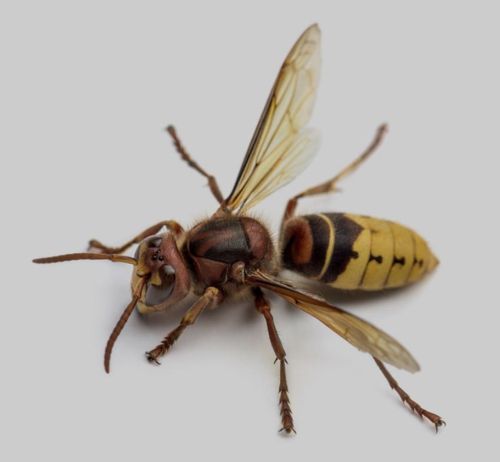
European Hornet
Vespa crabro
- Order & Family
- Order: Hymenoptera, Family: Vespidae
- Size
- Workers typically measure 18-25 mm (0.7-1 inch) in length, while queens can be larger, ranging from 25-35 mm (1-1.4 inches).
Natural Habitat
European Hornets typically build their nests in dark, sheltered locations. Common nesting sites include hollow trees, rock cavities, abandoned rodent burrows, attics, wall voids of houses, sheds, and sometimes underground.
Diet & Feeding
Adult European Hornets feed on nectar, tree sap, and fallen fruit. They are also predatory, hunting a variety of insects, including grasshoppers, flies, bees, and other wasps, to feed the larvae in their nest. Larvae consume the protein-rich insect pulp brought by the workers.
Behavior Patterns
European Hornets are social insects living in colonies with a queen, workers, and males. Nests are built from chewed wood fibers mixed with saliva, creating a paper-like material. They are most active during the day, foraging for food. Unlike some other wasps, they can fly at night and are sometimes attracted to lights. They can be defensive of their nests if disturbed, but away from the nest, they are generally less aggressive than yellow jackets.
Risks & Benefits
Potential risks include their sting, which can be painful and may cause an allergic reaction (anaphylaxis) in sensitive individuals, similar to other bee and wasp stings. They can be aggressive if their nest is threatened. Benefits include their role as predators of various insect pests, helping to control populations of other insects that might be considered agricultural or garden pests.