
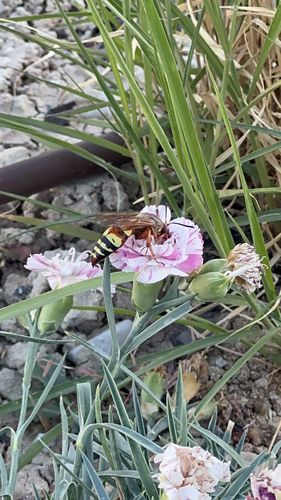
Eastern Cicada Killer Wasp
Sphecius speciosus
- Order & Family
- Order: Hymenoptera, Family: Crabronidae
- Size
- Typically 1 to 2 inches (2.5 to 5 cm) in length, making them one of the largest wasps in their range.
Natural Habitat
Cicada killers prefer areas with loose, sandy soil for digging their burrows, often found in lawns, gardens, golf courses, and along the edges of wooded areas.
Diet & Feeding
Adult cicada killer wasps feed on nectar and plant sap. Female wasps hunt and paralyze cicadas to provision their nests for their larvae, which feed on the paralyzed cicada.
Behavior Patterns
Cicada killers are solitary wasps, meaning they do not live in colonies like social wasps. Females dig burrows in the ground where they provision paralyzed cicadas for their larvae. They are typically docile and not aggressive towards humans unless provoked. Males may be territorial but cannot sting.
Risks & Benefits
Risks: Females can sting, but rarely do unless directly handled or stepped on. The sting is generally not considered severe unless an individual is allergic. Benefits: They help control cicada populations and are native pollinators.