
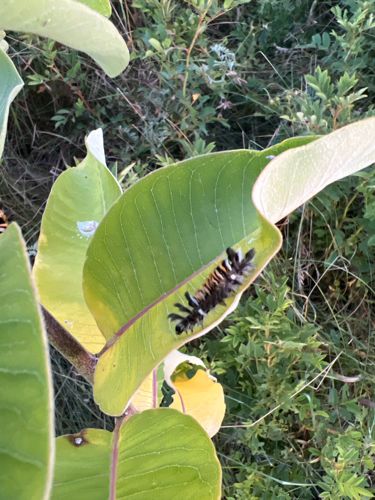
Monarch Caterpillar
Danaus plexippus
- Order & Family
- Order: Lepidoptera, Family: Nymphalidae (Brush-footed butterflies)
- Size
- Monarch caterpillars can grow up to 2 inches (5 cm) in length during their final instar before pupation.
Natural Habitat
Monarch caterpillars are found wherever milkweed plants grow, which includes meadows, fields, roadsides, gardens, and other open habitats across North and South America. They are particularly active during the warmer months.
Diet & Feeding
Monarch caterpillars feed exclusively on milkweed plants (Asclepias species). The ingestion of cardenolides from the milkweed makes the caterpillars (and subsequent butterflies) toxic to many predators.
Behavior Patterns
Larvae (caterpillars) are known for their voracious appetite, feeding heavily on milkweed leaves. As a defense mechanism, their bright coloration warns predators of their toxicity. They will typically spend their larval stage on milkweed plants before pupating into a chrysalis. The adult Monarch butterfly is migratory, traveling thousands of miles.
Risks & Benefits
Monarch caterpillars pose no direct risk to humans. Their primary benefit is ecological, as they are essential for the survival of Monarch butterflies. Monarch butterflies are important pollinators and iconic insects, and their populations are facing significant decline due to habitat loss and pesticide use. The caterpillars are also a key part of the food web, though their toxicity limits their predators.