
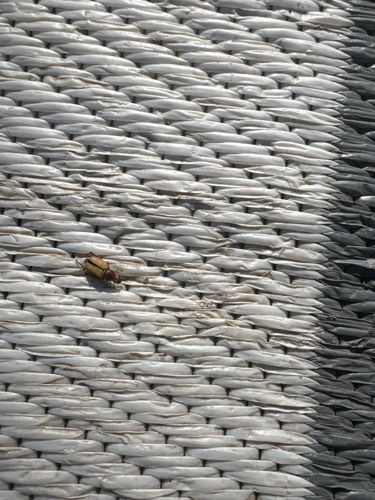
Scarab Beetle (likely a species of June Beetle/May Beetle or a related chafer beetle)
Various genera within Scarabaeidae (e.g., Phyllophaga, Cotinis, Popillia)
- Order & Family
- Order: Coleoptera, Family: Scarabaeidae
- Size
- Typically 15-30 mm (0.6-1.2 inches) in length, though size can vary significantly between species.
Natural Habitat
Found in various habitats, including agricultural fields, gardens, lawns, forests, and grassy areas. They are common in temperate and tropical regions worldwide.
Diet & Feeding
Adult scarab beetles primarily feed on the foliage of trees, shrubs, and grasses. Larvae (grubs) feed on plant roots.
Behavior Patterns
Adult beetles are typically nocturnal and attracted to lights at night. Females lay eggs in the soil, and the larvae (grubs) live underground, feeding on plant roots for one to several years before pupating and emerging as adults. They are strong, clumsy fliers.
Risks & Benefits
Risks: Larvae (grubs) can be significant agricultural and lawn pests, damaging crops and turf by feeding on roots. Large adult populations can defoliate trees and shrubs. Benefits: As part of the ecosystem, they contribute to nutrient cycling. Some species are important pollinators or detritivores.