
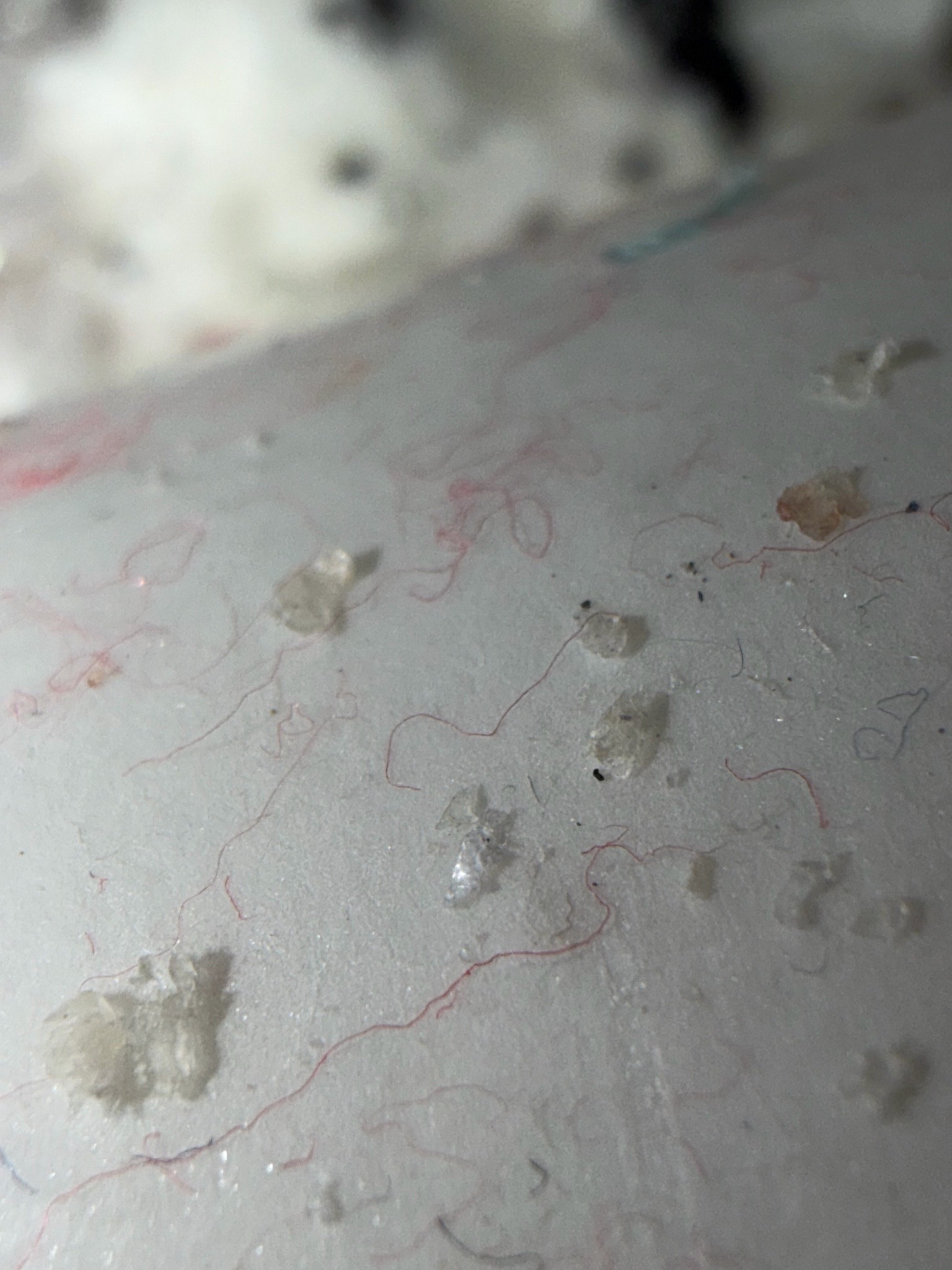
Booklouse (psocid), likely a household species
Liposcelis spp. (identification to species is not possible from this image)
- Order & Family
- Psocodea; Liposcelididae
- Size
- About 0.5–2 mm long; the pictured individuals appear near the lower end of this range.
Natural Habitat
Humid indoor locations, especially bedding, stored paper, cardboard, cupboards, and areas with mold or condensation. They may occur on surfaces where microscopic fungal growth accumulates.
Diet & Feeding
Feed mainly on mold, fungal spores, algae, starches, and organic residues. They do not bite or feed on blood.
Behavior Patterns
Small, pale, slow-moving insects often found in groups under humid conditions. Populations increase with moisture and decline when areas are thoroughly dried; some household species reproduce without males.
Risks & Benefits
Harmless to people, pets, and fabrics, though large numbers indicate excess humidity or mold risk. They contribute modestly to decomposition but are primarily considered nuisance pests indoors.