
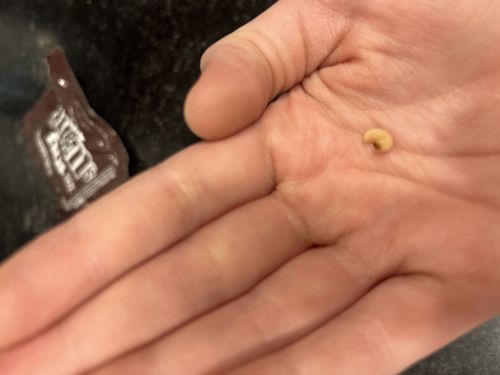
Indianmeal moth larva (or similar pantry moth larva)
Plodia interpunctella (likely, but could be other Pyralidae larvae)
- Order & Family
- Lepidoptera (moths and butterflies), Pyralidae (snout moths)
- Size
- Larvae typically 10-14 mm (0.4-0.6 inches) long when fully grown
Natural Habitat
Pantry environments, kitchens, food storage areas, infesting dried goods such as grains, cereals, nuts, dried fruit, pet food, and sometimes chocolate. They prefer dark, undisturbed locations.
Diet & Feeding
Larvae feed on a wide variety of dried food products, including grains, cereals, flour, cornmeal, nuts, seeds, dried fruits, pet food, and chocolate. They are primary pests of stored food products.
Behavior Patterns
The larva emerges from an egg laid on a food source. It then feeds and grows, undergoing several molts. Before pupating, it often leaves the food source to find a protected crevice or crack, sometimes crawling up walls or ceilings. The observed specimen's curled shape is typical of many moth larvae (caterpillars).
Risks & Benefits
Risks: Significant pantry pest, contaminating food products with their silk webbing, frass (excrement), and shed skins, making the food unpalatable and unsuitable for consumption. They do not pose health risks like biting or stinging, but can cause allergic reactions in sensitive individuals due to contaminated food. Benefits: None in a domestic setting; ecologically, they are part of the food web.