
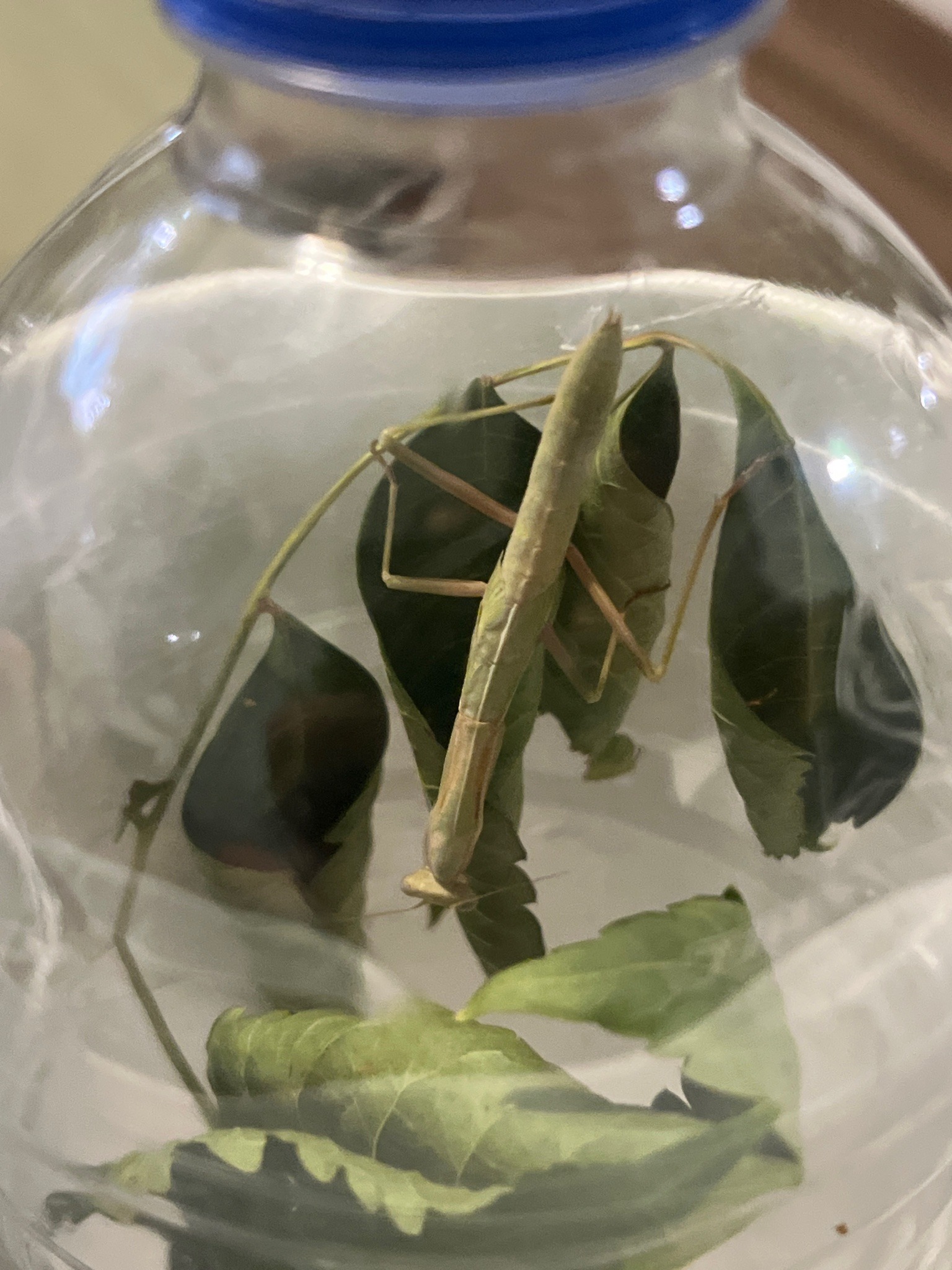
Community identification
Praying Mantis
Mantodea
- Order & Family
- Order Mantodea, various families (likely Mantidae)
- Size
- 2 to 6 inches (5 to 15 cm) depending on the species.
Natural Habitat
Gardens, meadows, forests, and grassy fields with plenty of vegetation for camouflage.
Diet & Feeding
Carnivorous predator; eats insects like flies, crickets, and moths. Large species may eat small frogs or lizards.
Behavior Patterns
Ambush predators that remain motionless for long periods. Known for 'rocking' to mimic leaves. In some species, females exhibit sexual cannibalism.
Risks & Benefits
Generally harmless to humans but may bite if handled. Highly beneficial to ecosystems and gardeners as natural pest control.