
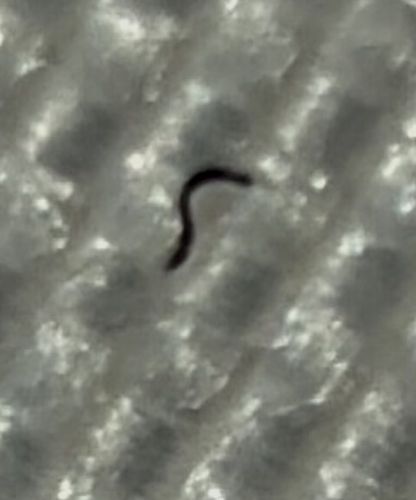
Drain Fly Larva (likely identification based on shape and context)
Psychodidae family (larval stage)
- Order & Family
- Diptera (Order), Psychodidae (Family)
- Size
- 3 mm to 10 mm (approx. 0.1 to 0.4 inches) in length
Natural Habitat
Moist, organic-rich environments such as drains, sewage filters, compost piles, and bathroom grout. They thrive in the slimy film that builds up in plumbing.
Diet & Feeding
Feeds on decaying organic matter, sludge, algae, bacteria, and fungi found in drains and moist areas.
Behavior Patterns
Larvae are semi-aquatic but breathe atmospheric oxygen. They are often found wiggling near drains or on shower walls. They go through a pupal stage before emerging as adult 'moth flies'.
Risks & Benefits
Generally harmless to humans (they do not bite or sting). However, they can be a nuisance pest in homes. In large numbers, they can indicate plumbing issues or unhygienic conditions. Excessive populations can potentially mechanically transport bacteria from sludge to surfaces.