
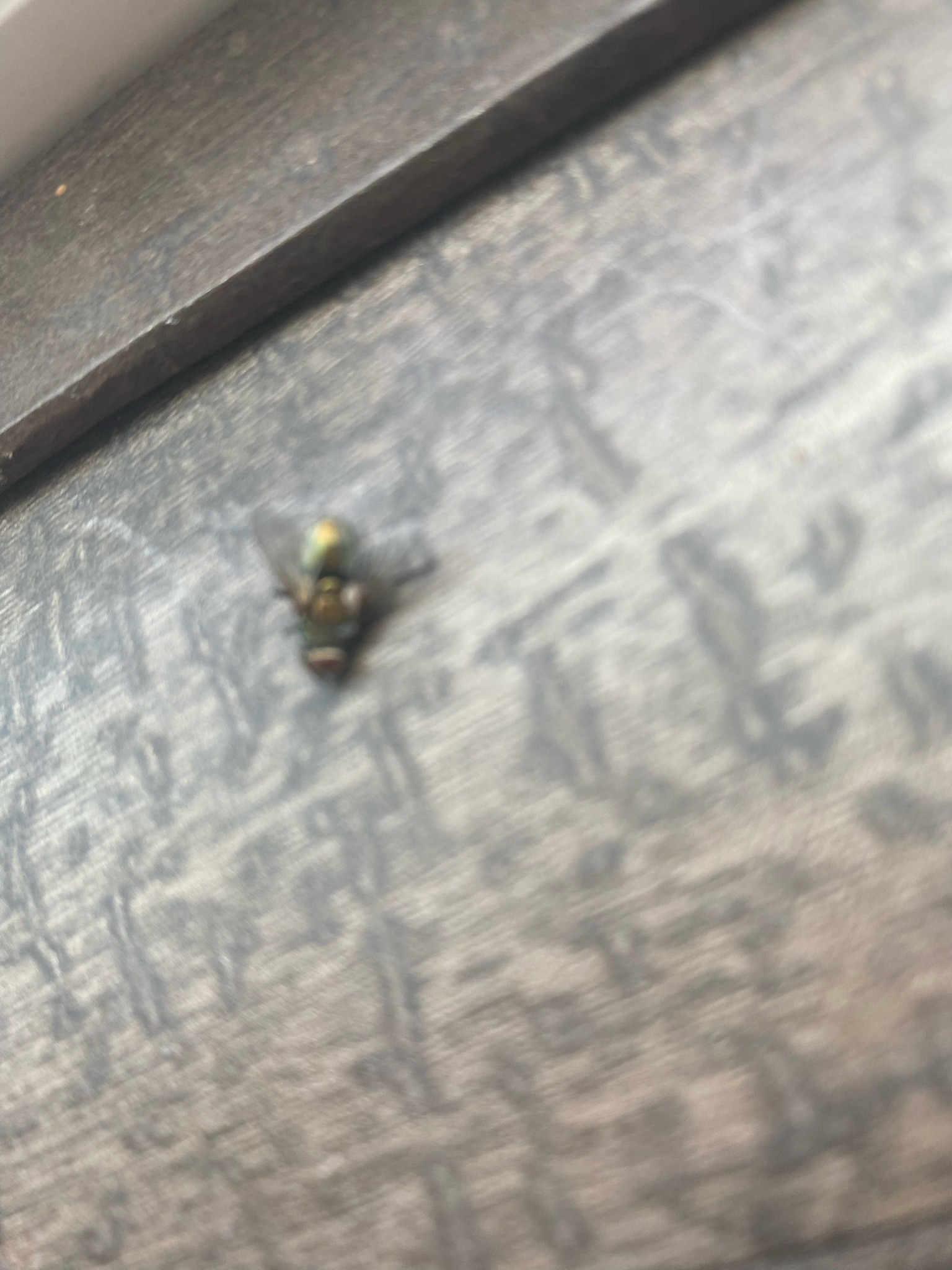
Community identification
Common Green Bottle Fly
Lucilia sericata
- Order & Family
- Order Diptera, Family Calliphoridae
- Size
- 10 to 14 millimeters in length
Natural Habitat
Found globally in most temperate and tropical climates, especially near decaying organic matter, garbage, and landfills.
Diet & Feeding
Adults feed on nectar and pollen; larvae (maggots) feed on carrion, necrotic tissue, and decaying animal or plant matter.
Behavior Patterns
Active during daylight hours, these flies are often the first to arrive at a carcass. They undergo complete metamorphosis with life cycles rapid enough to be used in forensic entomology to estimate time of death.
Risks & Benefits
Risks include the transmission of diseases like salmonella by contaminating food Sources. Benefits include their ecological role as decomposers and their medicinal use in sterile 'maggot therapy' to clean non-healing wounds.