
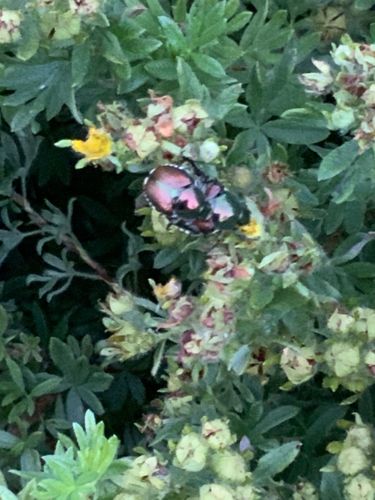
Japanese Beetle
Popillia japonica
- Order & Family
- Order: Coleoptera, Family: Scarabaeidae
- Size
- Adults typically measure 10-15 mm (0.4-0.6 inches) in length.
Natural Habitat
Japanese beetles are commonly found in urban and suburban landscapes, gardens, parks, golf courses, and agricultural fields. Their grubs prefer moist, rich soil where turfgrass is abundant.
Diet & Feeding
Adult Japanese beetles are highly polyphagous, feeding on the leaves, flowers, and fruits of over 300 species of plants, including roses, grapes, beans, and corn. The larvae (grubs) primarily feed on the roots of turfgrass.
Behavior Patterns
Adult Japanese beetles are active during the day, feeding on a wide variety of plants. They are strong fliers and can travel considerable distances. Females lay eggs in the soil, which hatch into C-shaped larvae (grubs) that feed on grass roots.
Risks & Benefits
Risks: Japanese beetles are significant agricultural and horticultural pests, causing widespread damage to crops, ornamental plants, and turf. Their feeding can skeletonize leaves and reduce plant vigor. In some cases, severe infestations can kill young plants. Benefits: There are no significant benefits associated with Japanese beetles; they are primarily considered a pest species.