
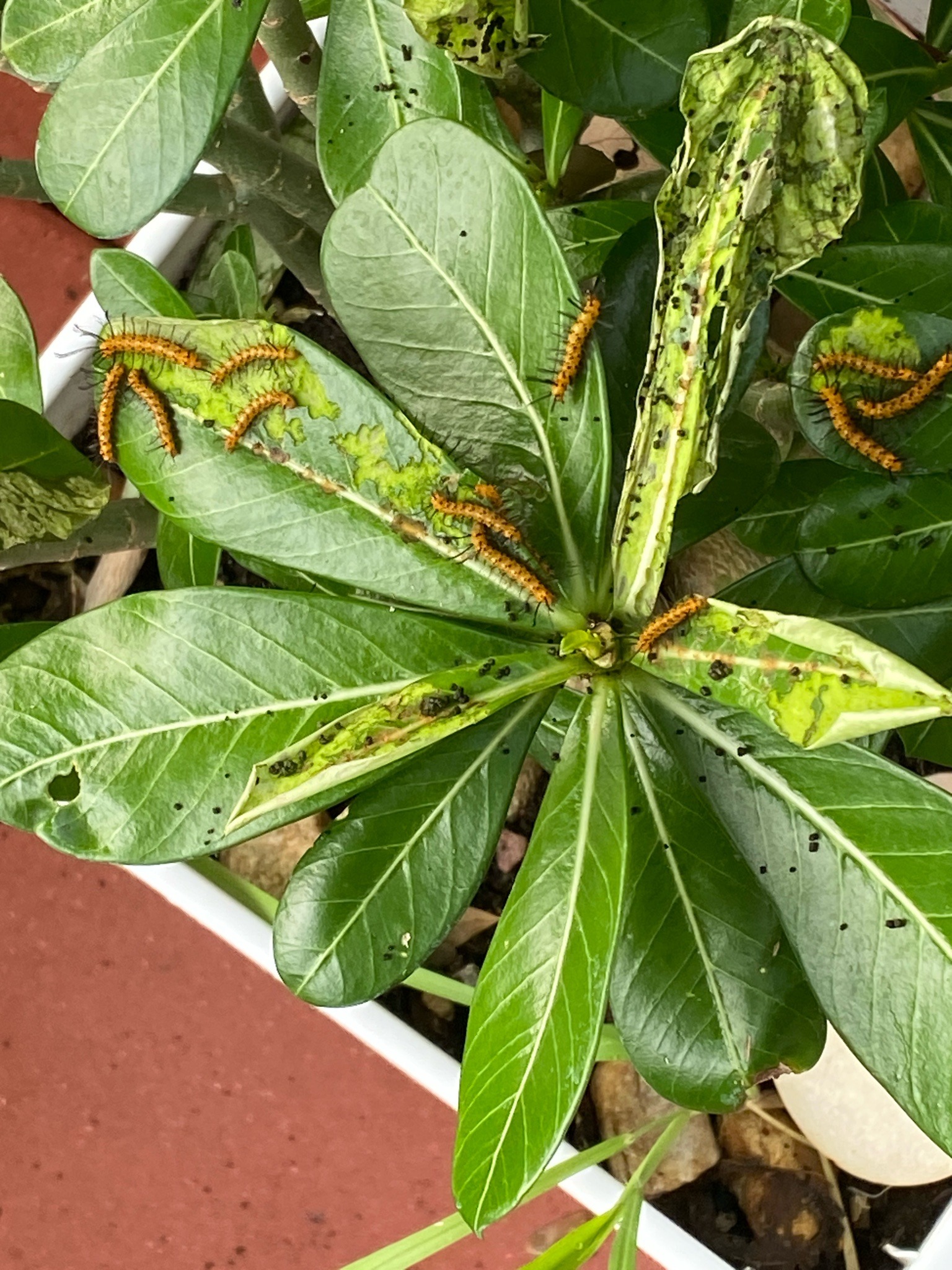
Oleander Caterpillar
Syntomeida epilais
- Order & Family
- Lepidoptera: Erebidae
- Size
- Larvae grow up to 25-40 mm (1 to 1.5 inches) long before pupating.
Natural Habitat
Commonly found in tropical and subtropical gardens, particularly on Oleander, Desert Rose, and Mandevilla plants.
Diet & Feeding
Strictly herbivorous; they feed on the foliage of plants in the dogbane family (Apocynaceae), specifically Oleander and Adenium (Desert Rose).
Behavior Patterns
Larvae are gregarious when young, feeding in groups on the underside of leaves before becoming more solitary as they age. They consume the leaf tissue, leaving only the veins (skeletonizing), and produce noticeable black fecal pellets (frass).
Risks & Benefits
They are major garden pests that can rapidly defoliate ornamental plants. While they do not sting, they sequester toxins from their host plants which makes them poisonous to predators. They eventually metamorphose into the Polka-Dot Wasp Moth, which is a beneficial pollinator.