
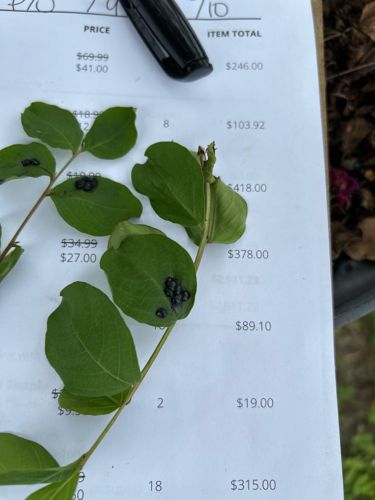
Sawfly Larvae
Though the exact species cannot be determined from the image, they belong to the suborder Symphyta.
- Order & Family
- Order: Hymenoptera, Family: Tenthredinidae (common sawflies) or other sawfly families within Symphyta.
- Size
- Larvae can range from a few millimeters to several centimeters long, typically between 1 cm and 3 cm when fully grown, depending on the species.
Natural Habitat
Found in environments with their host plants, which can include forests, woodlands, gardens, nurseries, and agricultural fields. They are typically found on the leaves or branches of these plants.
Diet & Feeding
Herbivorous. Different species feed on the leaves, needles, or buds of various trees, shrubs, and other plants. The specific host plant can vary widely depending on the sawfly species.
Behavior Patterns
Larvae of sawflies are plant feeders, with many species being host-specific. They often feed in groups, as seen in the image, or individually. They undergo complete metamorphosis, with larvae typically feeding on leaves and then dropping to the ground to pupate in the soil or leaf litter. They can cause significant defoliation when present in large numbers.
Risks & Benefits
Potential Risks: As plant defoliators, sawfly larvae can cause aesthetic damage to ornamental plants, reduce timber yield in forests, and in severe infestations, can weaken or even kill host plants, especially young trees. They rarely pose a direct risk to humans. Potential Benefits: In some ecosystems, they can be a food source for birds, parasitic wasps, and other predators. They play a role in nutrient cycling by breaking down plant material.