
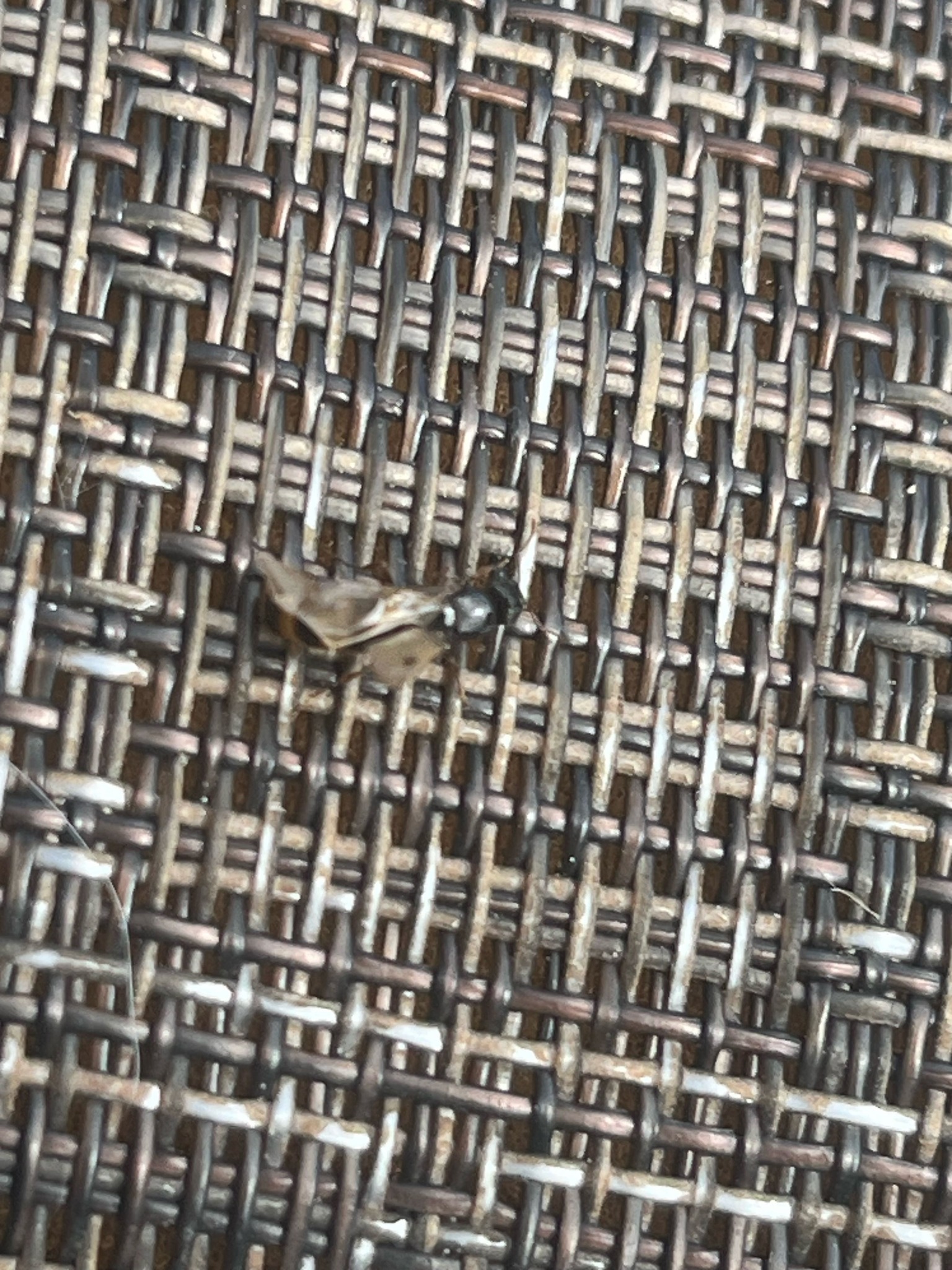
Community identification
Carpenter Ant Alate
Camponotus ssp.
- Order & Family
- Hymenoptera, Formicidae
- Size
- 10 - 20 mm (winged reproductives are generally larger than workers)
Natural Habitat
Nests are typically found in moist, decaying wood such as logs, stumps, or structural timber within homes that have moisture problems.
Diet & Feeding
Omnivorous; they consume proteins like other insects and carbohydrates including honeydew from aphids and nectar. They do not eat wood.
Behavior Patterns
The winged individuals shown are 'alates' or reproductive ants that participate in nuptial flights to start new colonies. They are often most active during the spring and early summer.
Risks & Benefits
They can cause structural damage to buildings by tunneling into wood to build nests. Ecosystem benefits include the decomposition of organic matter and acting as a food source for wildlife.