
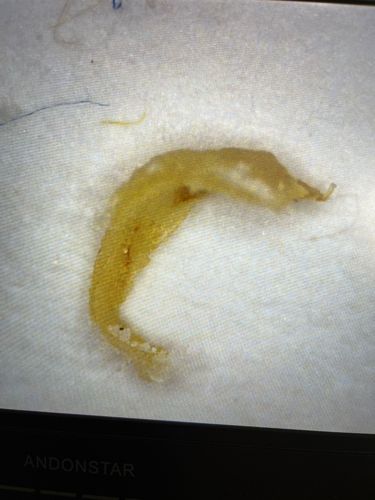
Rat-tailed Maggot
Eristalis tenax (larva)
- Order & Family
- Diptera (True Flies), Syrphidae (Hoverflies)
- Size
- Larvae can range from 10 to 30 mm (0.4 to 1.2 inches) in length, excluding the respiratory siphon which can extend an additional 50 mm (2 inches) or more.
Natural Habitat
Highly polluted aquatic environments, such as stagnant water, sewage lagoons, manure pits, and anaerobic sludge. They can tolerate very low oxygen conditions.
Diet & Feeding
Detritivores, feeding on decaying organic matter, bacteria, and microorganisms in their aquatic environment.
Behavior Patterns
Rat-tailed maggots are the aquatic larval stage of certain hoverflies. They possess a distinctive long, telescopic respiratory siphon located at their posterior end, which they extend to the water surface to breathe atmospheric oxygen. They are typically slow-moving and remain submerged in the decaying organic matter where they feed.
Risks & Benefits
Risks: While generally harmless, in rare cases, accidental ingestion of larvae or eggs from contaminated food or water can lead to intestinal myiasis (infestation of the digestive tract). Benefits: They play a role in decomposition and nutrient cycling in highly polluted environments. Adult hoverflies are important pollinators.