
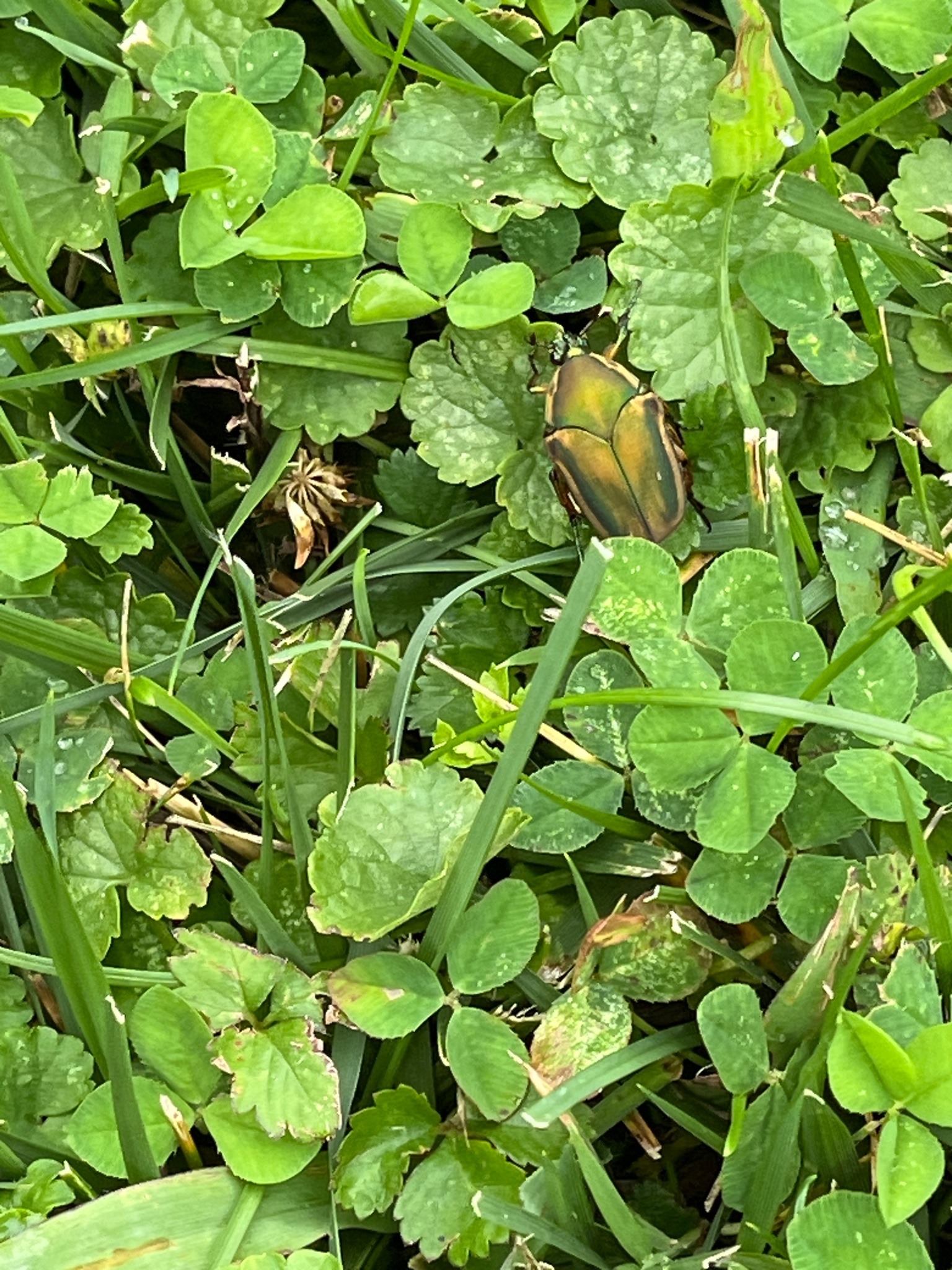
Community identification
Green June Beetle
Cotinis nitida
- Order & Family
- Order: Coleoptera; Family: Scarabaeidae
- Size
- 20 to 25 mm (0.8 to 1.0 inch) in length
Natural Habitat
Found in lawns, gardens, and fields across the eastern United States, typically where there is decomposing organic matter.
Diet & Feeding
Adults feed on ripe fruits (such as peaches, berries, and grapes) and plant sap. Larvae (grubs) eat decaying organic matter and roots in the soil.
Behavior Patterns
Diurnal and active flyers that produce a loud buzzing sound. They are known for their 'clumsy' flight. Larvae are unique for crawling on their backs.
Risks & Benefits
Benefits: Larvae help aerate soil and decompose organic matter. Risks: Adults can damage soft-skinned fruits and larvae can occasionally damage turf by tunneling or uprooting grass.