
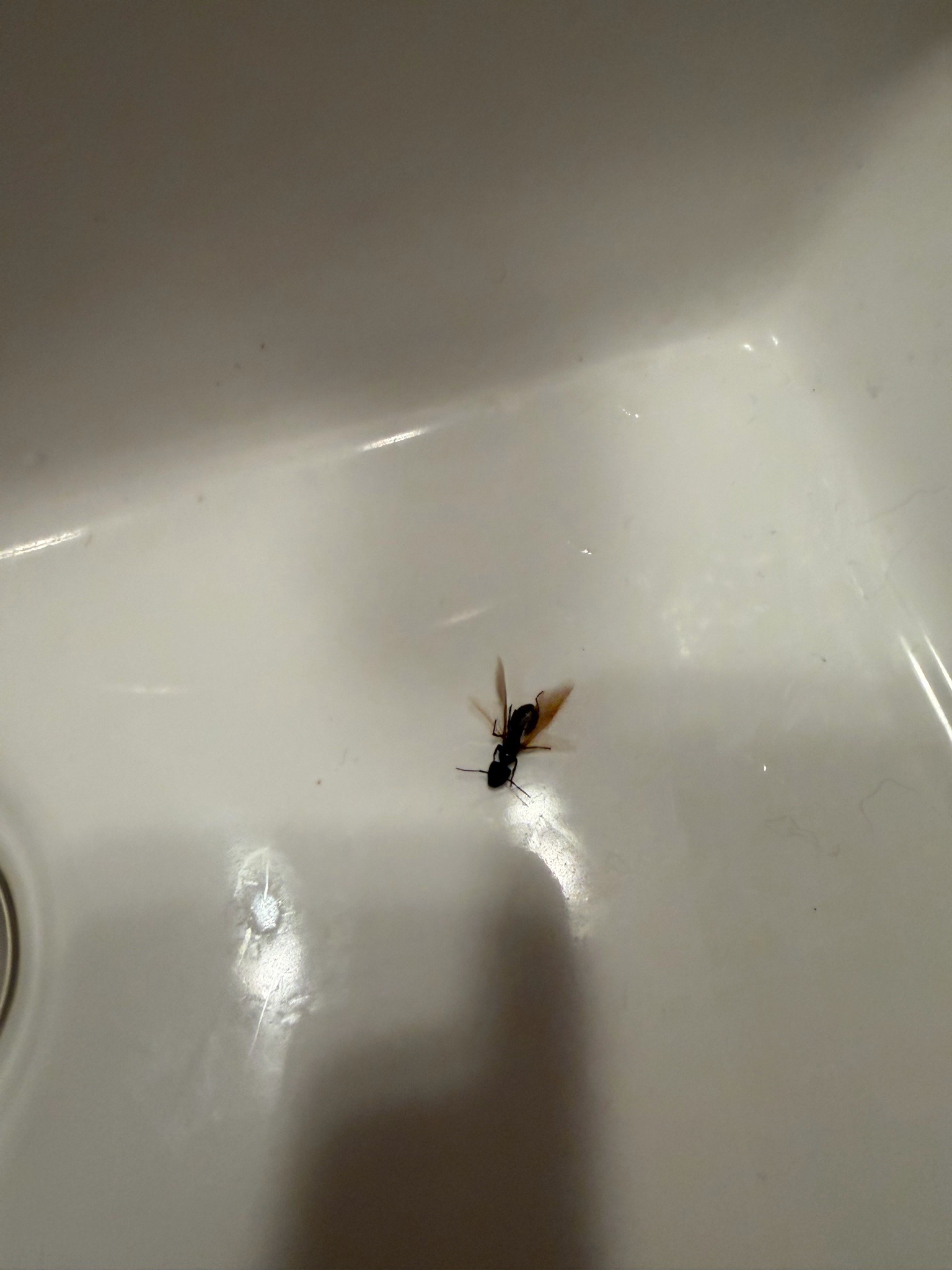
Black Carpenter Ant (Winged Reproductive Alate)
Camponotus pennsylvanicus
- Order & Family
- Hymenoptera: Formicidae
- Size
- 12mm to 18mm (approx. 1/2 to 3/4 inch) for winged queens/alates; workers are smaller.
Natural Habitat
Woodlands, forest edges, and suburban areas; they nest inside dead wood, tree stumps, and structural timbers of buildings, particularly where moisture is present.
Diet & Feeding
Omnivorous; they do not eat wood but excavate it to build nests. They feed on insects, plant juices, and honeydew secreted by aphids, as well as protein and sugar sources in homes.
Behavior Patterns
The presence of a winged reproductive (alate) indicates a nuptial flight, which occurs in spring or early summer to start new colonies. They are primarily nocturnal for foraging and exhibit a complex social structure within the colony.
Risks & Benefits
They can cause significant structural damage to homes by excavating galleries in wood. In nature, they are beneficial as decomposers of dead wood and as a food source for birds and other wildlife.