
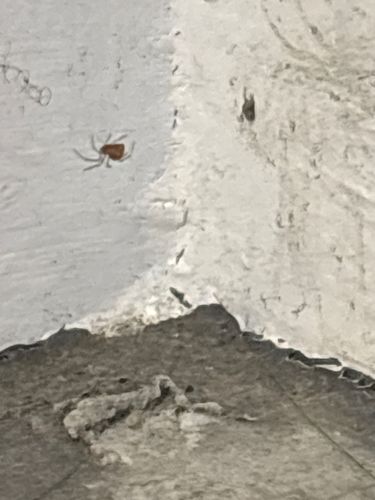
Red House Spider, Hobo Spider (less likely due to color and web type, more of a generic 'house spider' given image quality)
Steatoda grossa (most likely given appearance, though difficult to confirm definitively from image)
- Order & Family
- Araneae (Spiders), Theridiidae (Cobweb Spiders)
- Size
- Body length typically 4-10 mm; females are usually larger than males.
Natural Habitat
Commonly found in and around human dwellings. Prefers dark, undisturbed places likeसेलर्स, crawl spaces, garages, sheds, and behind furniture.
Diet & Feeding
Opportunistic predators that feed on a variety of insects and other small arthropods caught in their irregular, tangled webs.
Behavior Patterns
Nocturnal. Builds irregular, messy 'cobwebs' in corners and sheltered areas. Generally shy and reclusive, often remaining hidden in their webs during the day. Females are known to guard their egg sacs.
Risks & Benefits
Potential risks: While generally not aggressive, they can bite if feeling threatened or trapped. Their venom is not considered medically significant to humans, often resulting in symptoms similar to a bee sting (localized pain, redness, swelling, itching). Benefits: They help to control populations of household pests like flies, mosquitoes, and other spiders.