
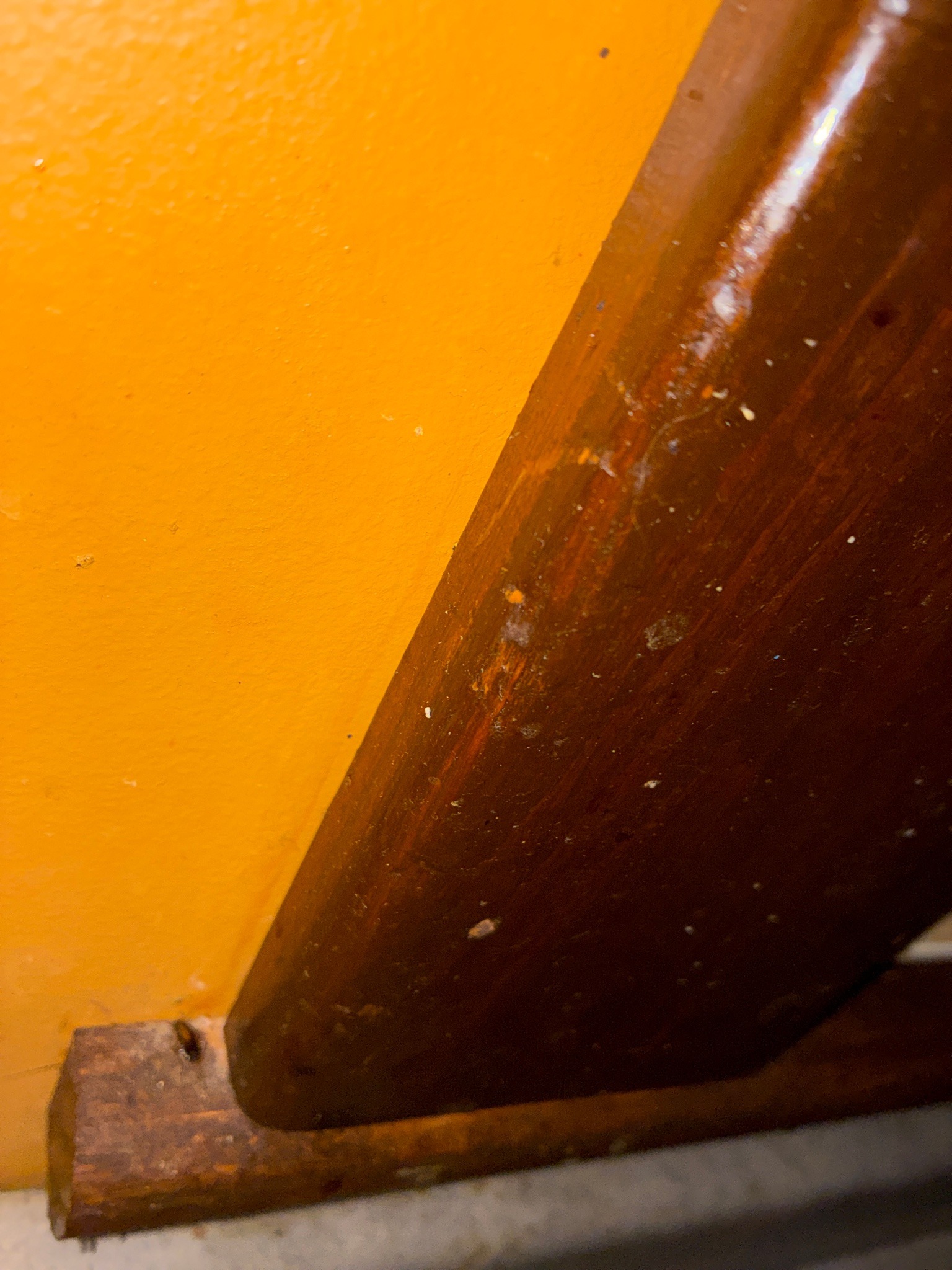
Likely booklouse (psocid)
Order Psocodea; exact species cannot be determined from this image
- Order & Family
- Psocodea; commonly family Liposcelididae indoors
- Size
- Typically 0.5–2 mm long; the visible speck is too small for precise measurement.
Natural Habitat
Humid indoor spaces, especially around wood, books, cardboard, wallpaper, and stored materials. They often occur in cracks and undisturbed corners.
Diet & Feeding
Feeds mainly on microscopic mold, fungi, algae, and organic residues rather than wood itself. Indoor species may graze on mold growing in damp materials.
Behavior Patterns
Wingless, soft-bodied, and usually slow-moving; populations increase in warm, humid conditions. They reproduce rapidly when moisture and mold are available, then decline when areas dry.
Risks & Benefits
Harmless to people, pets, and structural wood, and they do not bite or transmit disease. Their presence indicates excess humidity or mold risk; reducing moisture is usually more effective than insecticide.