
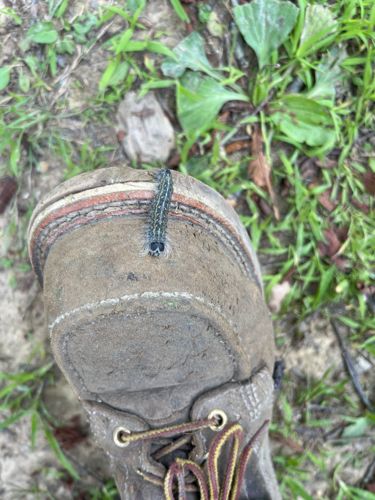
Eastern Tent Caterpillar (larval stage)
Malacosoma americanum
- Order & Family
- Order: Lepidoptera, Family: Lasiocampidae
- Size
- Larvae (caterpillars) typically grow to about 2 to 2.5 inches (5 to 6.5 cm) in length when fully mature. Adult moths have a wingspan of about 1 to 2 inches (2.5 to 5 cm).
Natural Habitat
Found in forests, woodlands, orchards, and urban/suburban areas where host trees are present. They are particularly common near wild cherry trees along roadsides and in unmanaged areas.
Diet & Feeding
Herbivorous, primarily feeding on the leaves of deciduous trees, especially wild cherry, apple, peach, plum, and other fruit trees (Rosaceae family).
Behavior Patterns
Eastern Tent Caterpillars are known for constructing silk "tents" or nests in the branches of trees, typically in the crotch of limbs. These tents are used for shelter, particularly during cool or wet weather, and as a communal resting place. They emerge from the tent to feed on leaves, often traveling in groups. Larvae typically hatch in early spring, feed for about 5-6 weeks, and then disperse to pupate in sheltered locations, often forming cocoons on tree bark, fences, or other structures. Adults are nocturnal moths that live only a few days to reproduce.
Risks & Benefits
Potential Risks: Can cause significant defoliation of host trees, especially during outbreaks, which can stress the trees and make them more susceptible to other issues. While their hairs are not typically urticating (stinging), some individuals may experience mild skin irritation from direct contact. Not directly harmful to humans or pets. \ Potential Benefits: They are a part of the natural food web, serving as a food source for birds, parasitic wasps, and flies. While considered a pest in orchards, in natural ecosystems, their defoliation can contribute to nutrient cycling, and healthy trees usually recover.