
Community identification
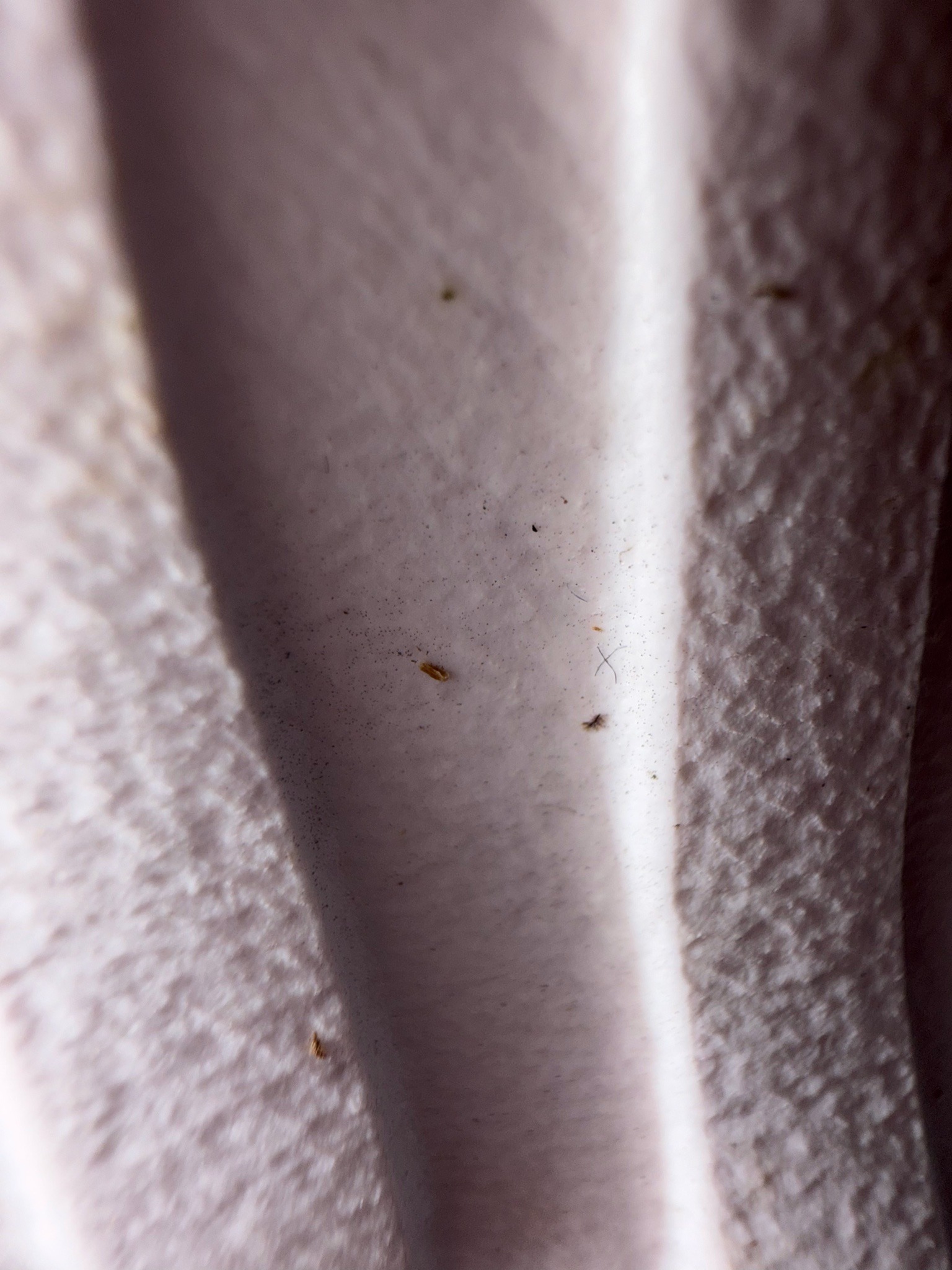
Booklouse (psocid), likely a barklouse
Order Psocoptera; exact species cannot be determined from this image
- Order & Family
- Psocodea; likely Liposcelididae or related family
- Size
- About 0.5–2 mm long; the pictured insects appear near the lower end of this range.
Natural Habitat
Humid indoor areas, especially window frames, curtains, books, cardboard, and wall crevices; also occurs beneath bark and leaf litter outdoors.
Diet & Feeding
Feeds mainly on microscopic mold, fungi, algae, pollen, and organic debris rather than fabric or wood.
Behavior Patterns
Tiny, soft-bodied insects that favor moisture and darkness; populations increase in damp conditions and decline when areas are dried and ventilated. They may disperse by walking or, in winged species, short flights.
Risks & Benefits
Harmless to people, pets, clothing, and structures; they do not bite or transmit disease. They recycle organic material, but noticeable indoor numbers indicate excess humidity or mold risk.