
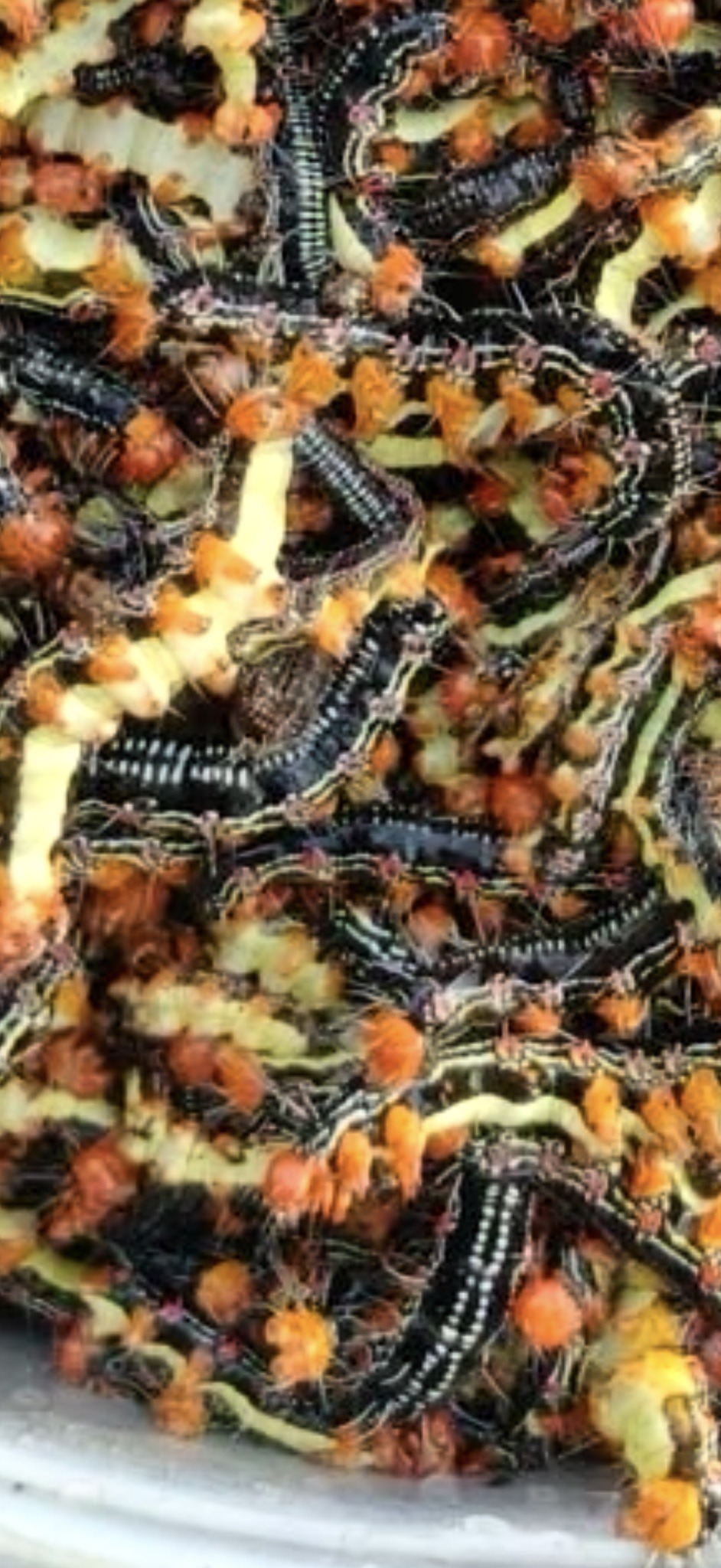
Community identification
Bristle millipedes (likely greenhouse millipedes)
Polyxenus lagurus (probable identification)
- Order & Family
- Polyxenida; Polyxenidae
- Size
- Typically 2–4 mm long, with a soft, segmented body covered in tufts of bristles.
Natural Habitat
Moist leaf litter, compost, decaying wood, greenhouses, and sheltered garden soil. They often gather beneath bark, containers, or plant debris.
Diet & Feeding
They graze on algae, fungi, lichens, and decaying organic matter rather than living plant tissue.
Behavior Patterns
Nonvenomous and generally slow-moving, they cluster in large groups where humidity and food are high. Their detachable bristles can deter predators, and they reproduce by indirect sperm transfer.
Risks & Benefits
They do not bite, sting, transmit disease, or damage healthy plants. They help break down organic matter, though large aggregations may indicate excessively moist, decomposing material.