
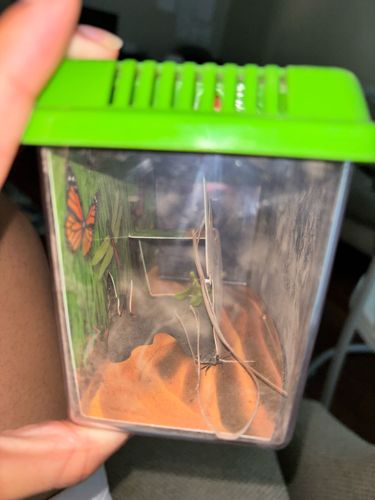
Community identification
Praying Mantis
Mantodea (Order name, species varies by region, likely Mantis religiosa or Tenodera sinensis)
- Order & Family
- Order: Mantodea; Family: Mantidae
- Size
- Typically ranges from 2 inches to 6 inches depending on the species.
Natural Habitat
Found in temperate and tropical habitats worldwide, including gardens, forests, meadows, and shrubbery.
Diet & Feeding
Carnivorous. They primarily eat other insects like flies, moths, and crickets; large individuals may eat small frogs or lizards.
Behavior Patterns
Ambush predators that remain motionless and use camouflage to wait for prey. They are known for their raptorial forelegs and the female's tendency to occasionally cannibalize the male during mating.
Risks & Benefits
Generally beneficial to ecosystems and gardeners as they provide natural pest control for harmful insects; they pose no significant risk to humans, though they can nip if handled roughly.