
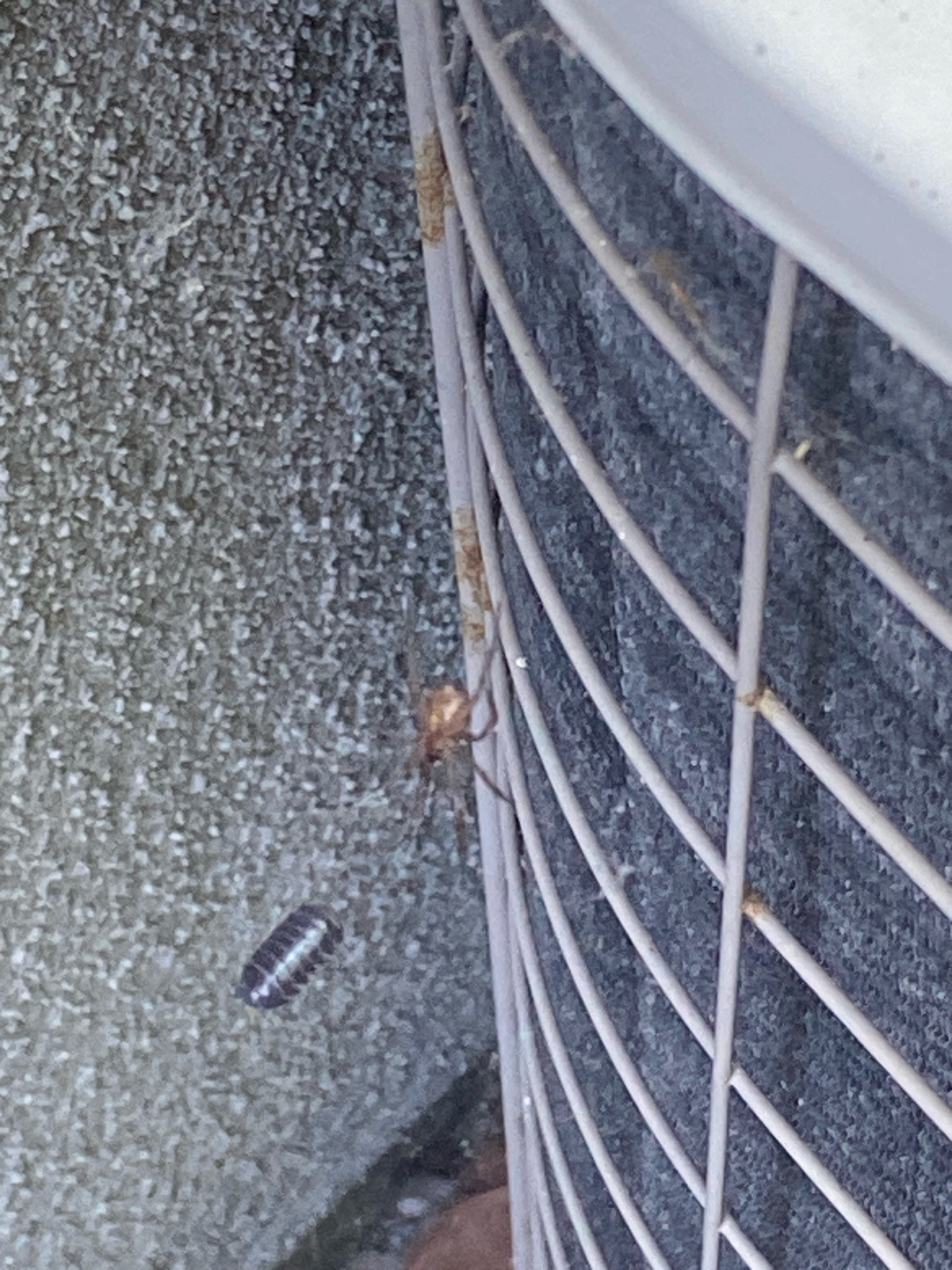
Community identification
Woodlouse Spider
Dysdera crocata
- Order & Family
- Order: Araneae; Family: Dysderidae
- Size
- Body length: 9 to 15 mm (females are larger than males).
Natural Habitat
Damp, dark places under logs, rocks, or leaf litter, often near buildings or gardens where woodlice are present.
Diet & Feeding
Strictly carnivorous; specializes in eating woodlice (sowbugs/pillbugs), using large chelicerae to pierce their hard exoskeletons.
Behavior Patterns
Nocturnal hunters that do not spin webs for catching prey. They spend the day in silk retreats and emerge at night to actively hunt.
Risks & Benefits
Benefits the ecosystem by controlling woodlouse populations. They are not dangerous to humans, but if handled, can deliver a sharp, painful bite that may cause minor localized itching or swelling.